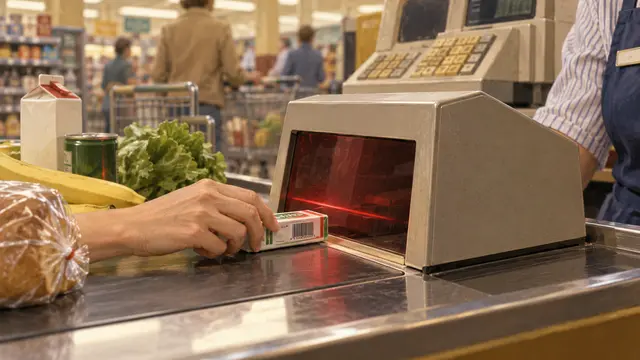
On June 26, 1974, a packet of Wrigley chewing gum passed a scanner at a Marsh supermarket in Troy, Ohio. This small purchase inaugurates the use at checkout of the new UPC code. The event does not mark the invention of any automatic reading, but an important step in the adoption of a common language for mass-market products.
The Smithsonian retains a Spectra Physics scanner belonging to this first installation. Its helium-neon laser sent a beam to a rotating mirror, then through a glass plate. A photodiode detected the light reflected from the label. The computerized body compared the signal to a database to recognize the product presented in front of it.
The code was therefore not simply a decoration for the machine: it linked a physical object to information recorded elsewhere. One detail corrects an often-repeated story: the package actually scanned never entered the Smithsonian. The museum keeps a witness to the technical device, but not this famous first chewing gum.
What we know
The original package is not kept at the Smithsonian.
To go to the source
References consulted on September 21, 2026. Linked pages may be in another language.
Signaler une erreur ou apporter une précision