1. The coffee that didn’t count
By six twenty, Samira had already said hello forty-seven times, pointed out three closed departments, looked for a chair and explained to an angry man that shouting at the counter would not make his wife arrive any sooner. At six twenty-two, she pushed open the bakery door and asked for something she could chew without thinking.
— "A brioche?" asked the man behind the box.
— Does it require a decision?
He considered the three varieties, took one nature and slipped it into a sachet.
— Not this one.
She should have gone back to sleep. His bus passed in nine minutes, his phone announced rain, and his feet had ceased to belong to him at about four o’clock. The man showed him the two stools in front of the window. There was still coffee. She agreed, with the precise resolution not to take any other resolution.
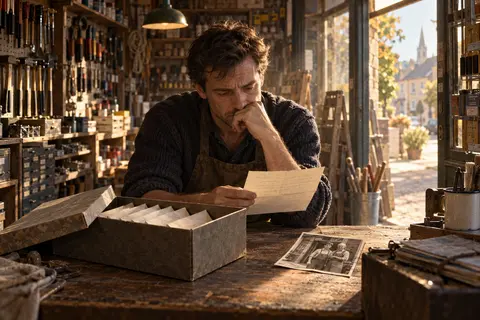
His name was Anton. She knew it by the little slate, not because he had introduced himself. He had flour on one sleeve, gray hair on the temples and an old cut on the chin. He worked at night, too, but his night produced something that people photographed. Samira’s, at the hospital reception, was to remain passable for those who passed through it.
He did not ask if she had seen terrible things. This is enough to make it interesting. He asked if the coffee was too strong. She replied that after some nights, she could have stored a spoon vertically. He laughed softly, as if the other inhabitants of the street were still sleeping behind the glass.
When she looked at the time, the bus was gone. She did not feel the expected regret. Outside, a deliveryman tried to reconcile a devil and a march. Anton went to help him, returned, and then served two clients. Samira observed his gestures: he did not rush unnecessarily, did not speak through people to reach the next. She ate the whole brioche.
When it came time to pay, he hesitated over coffee.
— This one doesn’t count.
— I like to know what I need.
He entered the price on the cashier without discussion. She was surprised to be happy. He didn’t need her to accept his generosity to keep smiling.
— See you next night, he said.
She replied that she did not choose them all. Then she left in the rain with her empty bag, suddenly less in a hurry to arrive at the time of day when no one would talk to her.
2. People of the Morning
She returned on Thursday and the following Monday. His nights of hospitality varied according to schedule; Anton’s nights almost always started before three o’clock. They crossed paths in this thin part of the day when she finished standing and he had already finished half a job. After four visits, he knew his coffee. At the end of six, she knew that he hated the word tradition when it was used to justify bad bread.
He was forty-five. She had forty-two. He didn’t ask if she looked less. She told him about Nassim, her twenty-year-old son, studying in another city. He had no children. He had a former companion, Lou, with whom he had bought the bakery, and a quiet way of pronouncing his name that spared Samira the obligation to take sides.
Lou came in one morning during their conversation, put a bag on the counter and asked if Anton had forgotten to order boxes again. He answered yes. She looked up at the sky and went to get the notebook. Samira later learned that they had separated four years earlier and kept the company together. The responsibilities were shared, so were the accounts. It took a lot more work than the wording suggested. As he put the book away, Lou reminded him of their appointment with the accountant. Anton nodded and returned to serve a client.
One Saturday, Anton asked Samira if she would like to have dinner. She answered yes before checking her schedule, and then found herself forced to explain that a free Tuesday was not necessarily a Tuesday where she could keep her eyes open. They took out their phones. The first common niche looked like a mistake: Wednesday, nine in the morning.
— “We can have dinner at nine o’clock,” he said.
— Are you able to find a restaurant?
— - Nope. But I know how to find bread.
He brought a small meal to a park. She arrived with strawberries and a towel that she had passed without wanting to think about this gesture. Children went to school behind their benches. Anton opened a box of cheese, Samira a packet of salty biscuits. They looked like two people who had gone on a trip too early.
He asked her how long she had been working in the hospital. She asked him why he didn’t like hiking. He explained that he preferred the leisure where one could sit before having deserved the view. She laughed so hard that a dog turned around.
At eleven o'clock he proposed to accompany her. She pointed to the stop on her bus.
— “Not further today.
— “Okay.
Then she put her hand on his. The surprise on his face pleased him almost as much as the gesture had frightened him.
3. The Interlaced Door
Their first kiss took place in front of a closed laundromat, which was not the romantic idea of either. It started raining as they joined the stop. Anton had moved to leave him the largest piece of awning. She said he was going to be soaked. He had said something silly about the brioche and the humidity, and then stopped in the middle of his own sentence.
— Can I? he asked.
She no longer laughed. She had only taken the small step that was missing. When the bus arrived, they watched him leave. Samira realized that she was now losing buses by choice and that this evolution had to figure somewhere in a dossier on aging.
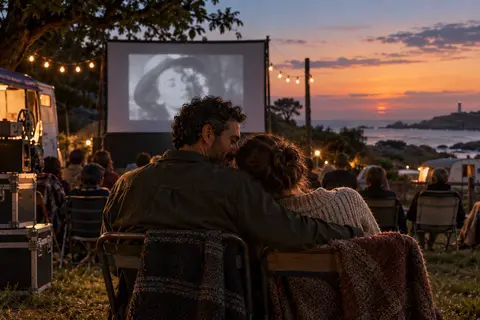
For a month they found hours. A cinema at two o’clock, where he fell asleep before the credits; a dinner at home, where she confused sugar and salt while preparing a dressing; a walk by the canal, short enough to satisfy her conception of effort. They learned to laugh at their fatigue without taking it for disinterest.
She spoke from Anton to Nassim. Her son asked for a cookie recipe that she had enthusiastically described to him. With her consent, she forwarded her number to the baker, who sent the instructions with a very serious warning about the amount of salt. Their two lives were crossed for the first time by an almost insignificant message.
Anton came to sleep at her house on a Thursday. The next day, they woke up at different times and found themselves around an overcooked omelette. There was a sock under a chair. Samira discovered it later, took it in her hand and smiled before getting angry at herself. She didn’t want every forgotten object to look like an ad.
His marriage to Nassim’s father had ended seven years earlier. They ended up talking to each other almost exclusively in terms of schedules, payments and journeys. No scandal had made it easy to tell the story of the separation. One day, she realized that she was preparing her sentences to avoid silence, not to join someone. Since then, she held to her tranquility with a fervor that she sometimes made pass for independence.
Anton did not ask for a key. He always left his bag near the door and looked at the time before extending a lunch. This delicacy reassured her, and then began to trouble her. She surprised herself by wishing that he would forget the departure that she herself had carefully made possible.
One Sunday, he invited her to eat with Lou and a few friends from the bakery. Samira declined: she had worked the day before. It was true. That was not the whole truth. Would she like them? Should I choose a seat at the table? Would others see something she wasn’t ready to name yet?
Anton replied that they would find another opportunity. She felt her relief, then saw, just behind, a disappointment that she chose not to examine.
4. The son came back earlier.
Nassim came home on a Tuesday with two bags and a dying plant. He had announced a few days of visitation. After a week, he didn’t buy a ticket. Samira recognized the manners of her teenage son: the dishes made before a request, the answers too fast, the walks that led nowhere. She waited until Friday to ask him what was really going on.
He had interrupted his first year after several months where he had hardly gone to class. He hid her because she was proud when she said the name of her school. The expenses incurred, the accommodation, the train tickets seemed to him now a pile of evidence against him. He had preferred to delay the conversation until he had no place to store it.
Samira remained silent for a long time. She thought about the calls she had asked him if he was eating right and never if he still wanted to be there. Then the anger came, not against the cessation of studies, but against the months of lies. She let it exist without giving her all the keys to the room.
— You can stay, she said. We'll talk about what's next. But I don't want to have to investigate who I live with.
She warned Anton that they would not be able to dine at her house the next day. He proposed something else. She answered later, then forgot. At four in the morning, during a pause, she finally wrote him a few lines. His son needed time. So did she. Anton replied that he understood.
On Monday, she stopped at the bakery and told him more. She was exhausted, ashamed to be so worried about a problem that was not a disaster. Anton listened to him. He told her that he knew a manager at a small distribution company who was sometimes looking for staff. Samira nodded without really holding back the proposal.
Two days later, Nassim received a call. The man explained to her that Anton had spoken about his situation and passed on his number. This number had been given a few weeks before for a cookie recipe, nothing else. Nassim hung up politely, then put his phone on the table.
— Did you send someone to fix me?
Samira felt fatigue leaving her face. She did not allow this call or explanation. For the first time since the first morning coffee, she had no desire to go to the bakery.
5. A place obtained too quickly
Anton understood that he had made a mistake before Samira had finished his first sentence. However, he tried to explain that the job could have agreed, that he had not given details, that he only wanted to help. Each precision added a step to the stairs she was trying to get down.
— “It’s not about the quality of the offer,” she said. You told my son to a man he didn’t know. You used his number for something else.
— I thought I was taking a worry away from you.
— You decided what my concern was.
They were in the backroom. The swinging door let through the customers’ voices and a smell of hot crust. Samira would have preferred a place where no one asked for a full loaf of bread in the middle of a difficult sentence. Anton wiped his hands on his apron, a useless gesture: they had been clean for several minutes.
He agreed to call back his contact to clarify that he had taken an unrequested initiative. He would also write to Nassim to acknowledge the error, without asking him for an answer. Samira said it was necessary. She did not add that it would be enough.
— “You know,” Anton went on, “I don’t feel like I have a place in your life. Only in your breaks.
The sentence piqued her all the more since it was not entirely false. First, however, she heard an invoice presented at the wrong time.
— “And you thought you’d earn it by finding a job for my son?”
He opened his mouth and then closed it. Lou went into the room, understood immediately, and left without taking the roll of paper she had come to fetch. This simple witness made Anton paler.
— “Perhaps,” he finally said. Not consciously. But maybe.
Samira thought he would deny it. His honesty took away the rest of his prepared anger, without erasing what had provoked him. She told him she needed a few days. He asked if he should call her. She said no, for now. Then she went out through the entrance of the customers and mechanically bought a baguette before realizing the absurdity of this gesture.
At home, Nassim was waiting for him. She explained what had happened to him, acknowledged his own lack of clarity with Anton, and apologized for talking about his situation without checking what he agreed to share. His son listened without triumphing.
— “I don’t want him to disappear because I’m back,” he said.
— It’s not you who decides that.
— - Exactly. I wish it wasn't me.
She put the baguette on the table. She still didn’t know who she had bought it for.
6. The three things we don’t give back
For ten days, Samira passed the bakery without entering. She bought her bread elsewhere, less good, which she found unfair. She looked at the stools in front of the window. One morning, someone was occupying her place; she hurried, angry to think again “her place.”
He kept his word. A single message confirmed that he had called his contact and written to Nassim. No additional sentence asked for a reward. His son showed him the answer he had sent: thank you for understanding, I will look for myself. Samira asked him what he was thinking. He proposed an appointment with an orientation service and applications to work in the meantime. They set a contribution to the house suitable for what he would earn, and a point in a month. No permanent trial or indefinite vacation.
One afternoon, she found Anton’s sock in the clean linen. He had also left a cookbook and a spoon that he preferred for coffee. Three objects, no reason to do a restitution ceremony. She put them in a drawer and opened them again. She began to be wary of the way she turned caution into closed furniture.
His colleague Pauline listened to him for a break, without interrupting his sandwich. When Samira had finished detailing Anton's wrongs, she asked:
— Do you want to see him again?
— “It is not so simple.
— I didn’t ask if it was simple.
Samira looked at the corridor. She had learned to distinguish between waiting and abandoning strangers. She found it more difficult at home. Yes, she wanted to see him again. She also wanted him not to seek to become indispensable before he felt loved. And she wanted to stop asking him to be patient in a room where she didn’t open any doors for him.
She wrote to him the next day to suggest a walk on Saturday. He replied that he would finish later because of an order, but would be free at four o’clock. The precision relieved her. He didn’t throw away everything he did to prove something.
Before leaving, she put the recipe book in her bag, then took it out. She did not want to break up by returning objects or tell him that he could now put his life in his drawer. She only took her keys.
Outside, the day was huge. She realized that she mostly knew Anton under lamps: that of the oven, that of her kitchen, that of a bus stop. She would see what their faces were doing without the help of the night.
7. A man in broad daylight
Anton was waiting for her near the canal, with a green sweater that she did not know. He looked less confident without an apron and slightly younger. Samira had a thought so tender that she was almost irritated. She would have liked to start with a solid argument. She began by telling him that the color was fine.
They walked without touching each other. Anton had his hands in his pockets; he began to ask if Nassim had called his contact, and then resumed.
— "Excuse me. It is to him that I should ask.
— You can ask me if he’s okay.
— "And he's all right?"
— Some days. Yesterday, he sent an application and did a red laundry with my sheets.
Anton smiled. She was waiting for his apology, already preparing what she would answer, but he talked about the message he had sent to the boy and the call to his contact. Then he shut up.
— Have you always done that? she asked. Finding solutions before others?
— Lou would say yes.
He gave a little kick in a rock.
— She said I would answer before I heard the end.
Samira looked at the water between the trees. She would have liked to be able to blame her only for her eagerness, without thinking of all the invitations she had left in suspense.
— Sunday with your friends. I could have come. I was tired, but not at this point.
— “I understood.
— "Not necessarily. I also didn't know very well. At home, for years, someone always needed something. After the divorce, I enjoyed the silence. It even worried me that I liked it so much.
Anton slows down to let a stroller through.
— “I don’t want to take your apartment, Samira.
— "I know. I'm talking to you like you've already made your cards.
They smile without looking at each other. She offered him dinner with Nassim, when he agreed, and then a real day for two. Anton asked when. This time, she took out her phone instead of answering soon.
They sit on a bench. She asked him what he wanted beyond the right to wait. He wanted moments that were not always the remains of something else. Sometimes a day planned in advance. Knowing that he could propose without feeling like he was disturbing an organization more important than himself.
— I can try, she replied.
— - Me too.
Their kiss was less surprised than the first and more attentive. Then they stared at a duck stubbornly against the current, until Anton noticed that it could perfectly pass on the other side of the small obstacle. Samira took his hand.
— Don’t help him.
8. The dinner where no one was to save
The first threesome dinner was held at Samira's two weeks later. Nassim prepared the vegetables. Anton brought a dessert, after asking if it was suitable. Samira would have found the question excessive in the past; this time she saw a somewhat stiff, but real, effort to replace assumptions with words.
The first few minutes were painful. Nassim spoke at dessert, Anton at drinks, Samira at anything that could prevent the silence from settling down. Then his son asked Anton if he really started working when he was sixteen. Anton answered yes. Samira dreaded a speech about the courage of youth and the value of a revival. Instead, he recounted his first week, where he had placed three orders under the wrong names and fled to the reserve to cry in anger.
— “And then?” asked Nassim.
— Then I put the orders in the right order. It was less interesting, but more useful.
They're laughing. Nassim explained that he had found temporary employment in a book depot. It would start on Monday. He was considering another training in the fall, without being sure of it. Anton asked if he wanted to talk about it or eat it first. The young man chooses to eat. The conversation moved on to football, an area in which none of the three had enough skill to impose silence on others.
After dinner, Nassim went out to meet friends. He did not leave the house with a smile of a son allowing his mother to love. He searched for his charger for ten minutes and asked who had finished the orange juice. This lack of solemnity did Samira immense good.
Anton helped him to get rid of it. He remained standing in front of the cutlery drawer until she told him. She also opened the other drawer, that of the book and the sock. He looked at the three objects, then at her.
— I was wondering where the spoon was.
— Is that really what you were missing?
— - Nope. But I can start with something easy.
She placed her forehead against her shoulder. So they stayed long enough for the water to cool in the sink. Later, she told him she wanted him to stay. He had prepared his next night’s work and could sleep until morning. They turned off the lights without negotiating what it meant for the next month.
When Samira woke up, she found her side of the bed empty. For a second, the old worry returned. Then she heard Anton in the kitchen, asking Nassim where the bowls were. His son replied, “I never know either. She laughed before leaving the room.
9. The Saturday they chose.
They booked an entire Saturday six weeks in advance. Anton exchanged a day’s work with Lou; Samira checked his schedule and refused an additional proposal on this niche. She would have gladly accepted it in the past, either for money or out of habit of being available. This time, she had a project that had no obligation, which gave her new importance.
They had to take a train to a nearby small town, have lunch and go home in the evening. No summit to climb, Anton had specified. No museum would require three hours standing, Samira added. Their first excursion looked like a peace treaty between two pairs of legs.
The day before, Nassim announced that he had received a negative response for the training he was most interested in. Samira immediately felt the movement that pushed her to cancel everything. He was sitting on his bed, upset, not destroyed. He showed her the message, explained the other applications and asked if she could read a new letter with him on Sunday.
— You don’t want us to do it tomorrow?
— Aren’t you supposed to leave?
She says yes. He looked at her with comic patience.
— "Then go. I can miss something without everyone staying home.
In the morning, Anton was waiting for him at the station. He had a tiny bag and seemed delighted to be ill-prepared for something. She told him the answer received by Nassim. He asked how his son had taken it, and then stopped before the next sentence. She observed him.
— Are you going to suggest someone to call?
— “I was going to ask if you wanted to look for another school on the train. But I can also look out the window.
— Look out the window.
He did. She leaned against him, then looked out.
In the small town, they got lost before they had even chosen a restaurant. Anton claimed to recognize a place he had never seen before. Samira let him talk until they came back to the same pharmacy. They ate breakfast late, walked little, bought biscuits that Anton criticized before eating four. At the time of paying, Anton told her that he had something to tell her on the train. She asked him if it was serious. He replied that he hoped not, then carefully put away the bag of cookies.
When they came back, they talked for a long time. Then she fell asleep on her shoulder. He stood still, not because she was fragile, but because he loved her weight against him. As they approached the station, he slowly woke her up. She opened her eyes and said, still half asleep:
— Next time we could stay one night.
He did not answer immediately. Then he smiled like the first morning, before a simple request.
10. The last batch
In the fall, Samira understood why Anton had insisted so much on keeping their Saturday free. He wasn’t looking for a day that finally looked like other people’s lives. He needed to talk to her without being called to the baker in the middle of his sentence.
On the return train, before she fell asleep, he had announced that he wanted to give up his share of the bakery.
She began by asking if things were going wrong. He said no. If Lou wanted to sell. Neither. If he was sick. At this third question, he had removed his hand from his to open his bottle of water.
— Does something have to happen to me to make me want to stop?
Samira was dead.
He had been doing this job for nearly thirty years. He still liked some mornings, the first dough, the sound of the knife against the crust. He didn’t like to go to bed when his friends started their evenings or count the hours before waking up while she talked to him. He had long believed that being good at something meant continuing.
— "And what would you do?"
— I don't know yet. It's okay. But not every day.
She had looked at his bag, where he had put the cookies bought in the afternoon. She knew him by his breads, his schedules, his way of occupying the counter. She had thought she had a place for him; much of that place was already wearing an apron.
— How long have you been thinking about it?
— Before we meet.
He explained to her the conversations with Lou, the meeting with their accountant, the different ways of transmitting his part. Nothing was signed. Lou wanted to continue, provided he found an organization that didn't make him pay for Anton's departure alone. He would have less income for a while. He had done his calculations, redone them, and then waited again.
Samira remembered the first brioche. She thought she had entered the life of a settled man. Maybe he was already looking for a way out.
— Why didn't you tell me?
— "Because you were coming, and I loved at last what I expected at six-thirty."
She had a movement towards him. He gently shook his head.
— That's not a reason to stay. I don’t want you to become the reason I’m continuing a job I want to leave.
She did not tell him that they would necessarily find a solution. She only knew that she wanted to participate in the conversation. When she fell asleep against his shoulder, it was after asking him if he wanted to show her his calculations another day. Not to put them back in their place.
The following weeks were less elegant than this promise. Anton repeated his decision several times. Samira found too expensive an expense he showed her, and then realized that he had not asked her to authorize it. A possible buyer withdrew. Lou reproached her for a delay which he had announced without consulting her; Samira heard the reproach and did not think herself obliged to choose a camp.
They continued to see each other. Nassim worked at the bookstore. Some nights he would come home while they were chatting at the table and ask if anyone had thought of dinner. The adults had not ceased to be adults, but they had lost in front of him their air of knowing the following.
In November, an agreement was reached with a baker who was already working in another shop in the neighborhood. Lou would remain associated. Anton would accompany the transition for a few weeks, then leave the bakery. He had accepted a few days of practical training in a workshop; the rest remained open.
For his last morning at the counter, Samira had planned to come as usual. His service continued. She wrote to him at six fifteen, then at seven, to say that she was still restrained. He said he would keep coffee.
At nine o'clock he had to leave for a long-established appointment. He warned her. She wrote to him not to wait for him, then felt an anger against him so unjust that she put her phone in her bag before she could use it.
She arrived at the bakery after ten o'clock. The new partner served a client. Lou was packing the orders. The stools in front of the window were occupied by two teenagers who shared a crescent while watching a video.
Samira stopped at the threshold. Lou saw her, finished her package and came to her.
— - He left you that.
In the bag, there was a plain brioche and the spoon that he had finally taken home. A small note surrounded the sleeve: “This one must not stay here.”
Samira squeezed the bag. Lou asked if she wanted to sit down. The teenagers were going to leave.
— No, thank you. I'll go home.
She got on the first bus. For once, she had no reason to miss it.
At home, she ate the brioche three times, between the removal of her shoes and that of her coat. Then she called Anton. He answered outside, in the wind.
— I'm too late.
— You could hardly give up your job.
— "I know. I'm still sad.
He did not seek to correct this.
— - Me too.
She asked him if he was free the next day at six o'clock.
— I was planning on having a good morning for the first time since...
— "Then the day after tomorrow. Or Tuesday. I'm asking you, I'm not calling you.
He laughs. They chose Tuesday.
Samira finished that night on time. She had placed two cups at home before leaving and bought bread the day before. When she opened her door, she found Anton on the landing, his hair still flat on one side. He had a small paper bag.
— Did you make brioches?
— I bought them. They are probably too cooked.
She took his coat. He walked in, looked at the cups, then the window overlooking the courtyard. There were no ovens or customers, and no one needed him to solve a problem before sitting down.
— “You know,” he said, “the first time I didn’t give you coffee because you looked tired.
— "Luckily. You should have given it to half the neighborhood.
— I was hoping you would come back.
She placed her spoon next to her cup.
— You could have said it.
— I was at work.
— - Not anymore.
Anton looked up at her. She waited, without giving him the sentence.
— Can I come back? he asked.
Samira had prepared two places. She did not show them as sufficient proof.
She says yes.
End