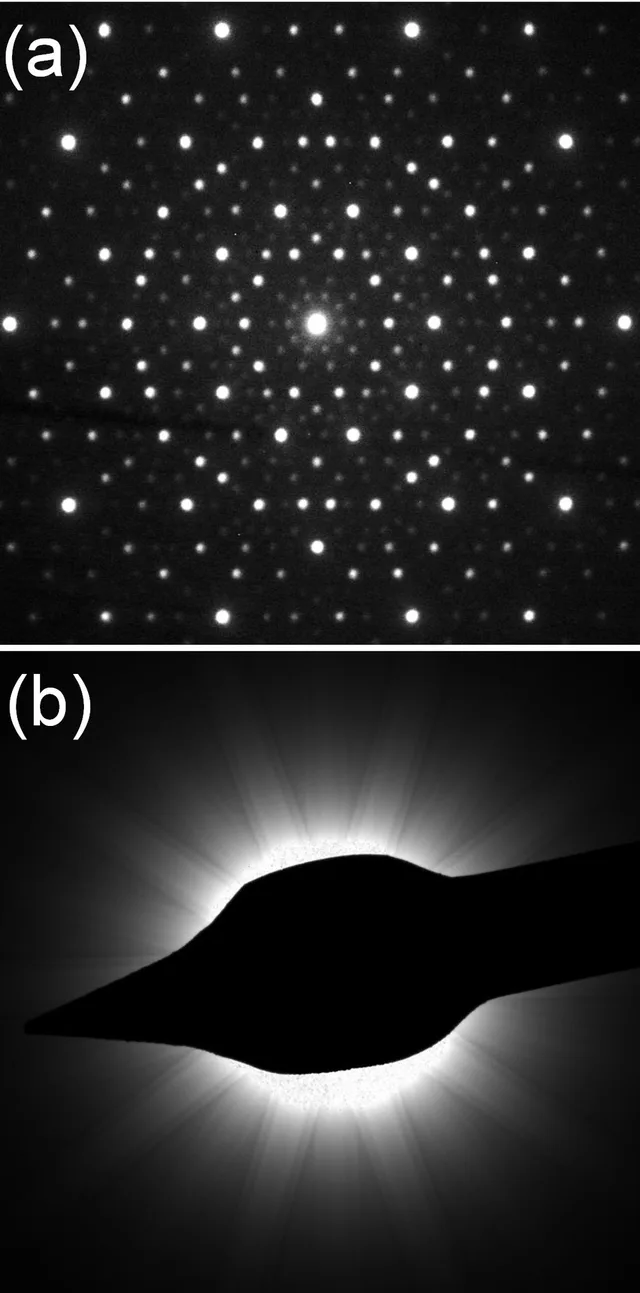
In 1982, Dan Shechtman examined a rapidly solidified aluminium-manganese alloy under an electron microscope. The organization he observes has a five-point symmetry. For the usual theory of periodic crystals, this pattern should not be there.
The crystals were then described as structures regularly repeating the same arrangement. Some symmetries agree with this repetition; the one Shechtman sees does not conform to it. The simplest would have been to look only for an error or a misleading effect in the sample.
However, he continues his observations and defends their interpretation. The publication takes more than two years, in a context of scientific skepticism. The following works establish that order can exist without periodic repetition: these materials take the name of quasicrystals.
The Nobel Prize in Chemistry in 2011 was awarded for the discovery. The material did not violate nature: it revealed the limits of the definition used to classify solids.
What we know
Forbidden for a classical periodic structure; not a violation of physical laws.
To go to the source
References accessed October 11, 2026. Linked pages may be in another language.
Signaler une erreur ou apporter une précision