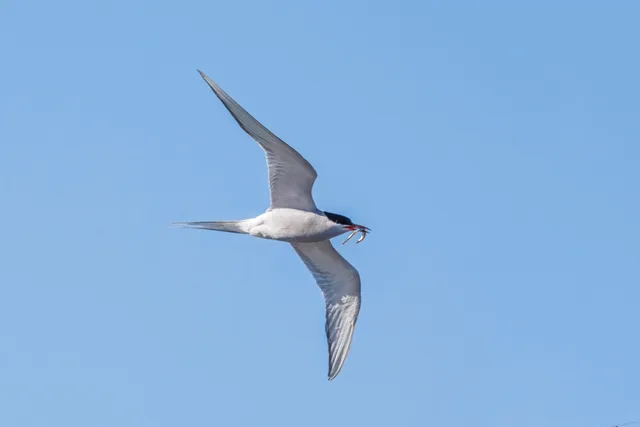
An Arctic tern weighs around a hundred grams. The tracking devices installed by a team of researchers have however revealed routes linking the Farne Islands, near England, to Antarctica and back to the North.
For an individual, the distance of a migration cycle has been estimated at about 96,000 kilometers. The road is not a straight line between two points: the bird adapts its route and feeds during the movement. The surveys also revealed unexpected passages, which did not always correspond to previously imagined coastal routes.
This figure belongs to a tracked animal and an estimate from its course; it is not the mandatory distance of each tern. Nor does it describe an uninterrupted flight. But it changes the scale of the gaze: the small bird seen above the sea can be engaged in a journey that crosses almost an entire planet.
What we know
Estimated individual distance; route with power supply, no continuous flight.
To go to the source
References accessed October 11, 2026. Linked pages may be in another language.
Signaler une erreur ou apporter une précision