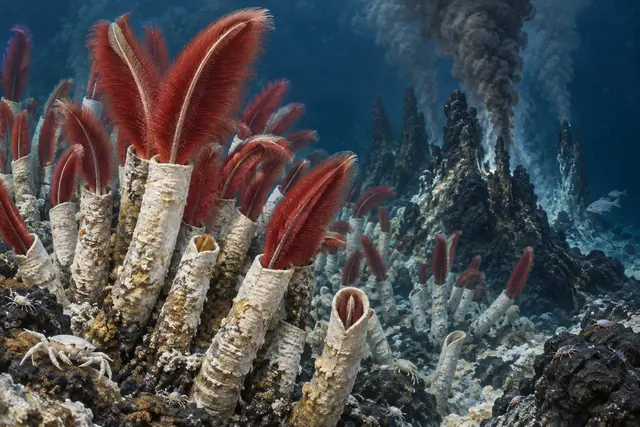
Around some hydrothermal springs, tubes house the Riftia pachyptila worms. Their red plumes unfold where mineral-laden water comes out of the bottom. This landscape does not receive the light on which photosynthesis directly depends.
Adult worms derive their nutrition from symbiotic bacteria that use sulfur compounds. Instead of capturing a meal like many animals, they host partners able to exploit the chemistry of their environment. The plume can retreat into the tube when a predator approaches.
If the hydrothermal activity stops, a colony may disappear. Other newly emerged sources are colonized by larvae, sometimes very far away. Researchers are still studying how they reach these places. The size of the worm does not make its existence independent: it remains linked to bacteria and the activity of the seabed.
What we know
Nutrition by chemosynthetic symbiosis; displacement and identification of larvae still studied.
To go to the source
References consulted on 3 October 2026. Linked pages may be in another language.
Signaler une erreur ou apporter une précision