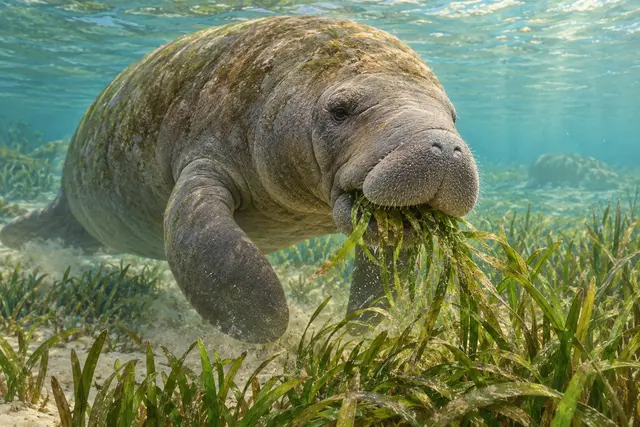
The manatee chews aquatic plants. This diet seems mild, but the plants can be mixed with abrasive sand. By crushing this mixture, its molars wear out. A dentition preserved throughout life would therefore gradually lose some of its mechanical efficiency.
The animal has an amazing solution: new teeth appear at the bottom of the jaw, then move forward. The older ones, which have become too worn out, end up falling. This horizontal replacement inspired the English expression “walking molars”, the molars in motion. The movement is progressive; obviously we should not imagine teeth sliding suddenly during each bite.
The renewal continues throughout the life of the manatee. It thus accompanies a repeated stress of its supply, rather than repairing a single accidental wear. Under the tranquil silhouette of this aquatic herbivore hides a dentition in permanent transformation: when a molar arrives at the end of its work, others have already begun their journey.
What we know
Dental displacement is progressive and continues throughout life.
To go to the source
References consulted on September 21, 2026. Linked pages may be in another language.
Signaler une erreur ou apporter une précision