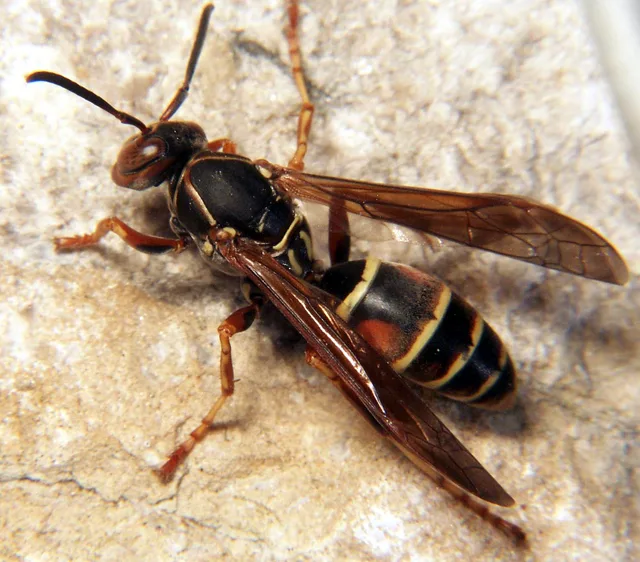
In a small group of wasps, two individuals may have different facial marks. For us, these variations seem easy to overlook. At Polistes fuscatus, however, they participate in the recognition of companions: the face is not only an interchangeable motif on an insect head.
Researcher Elizabeth Tibbetts studied this role by altering facial markings and observing reactions to return to the nest. Other tests compared learning normal faces to learning modified images. Wasps of this species are particularly effective for faces corresponding to their usual social environment.
These results do not make it possible to assign the same ability to all wasps, much less to affirm that they recognize every human passerby. The discovery is based on a more precise framework: an insect has a useful specialization to distinguish other individuals of its species. In the nest, what was thought to be a host of similar silhouettes may therefore have recognizable identities.
What we know
Recognition between wasps; no recognition of human faces asserted.
To go to the source
- University of Michigan Museum of Natural History — Wasp facial recognition (new tab)↗
- Sheehan et Tibbetts — Specialized face learning, Science 2011 (new tab)↗
References accessed October 11, 2026. Linked pages may be in another language.
Signaler une erreur ou apporter une précision