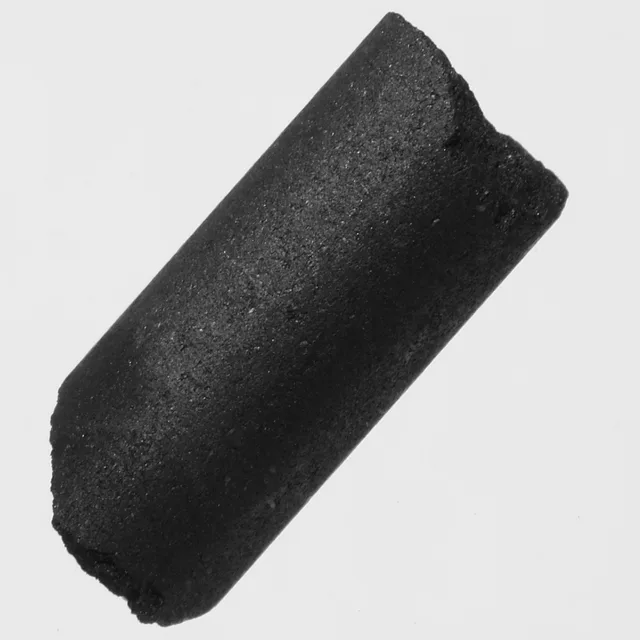
To obtain an extraordinarily thin material, Andre Geim and Konstantin Novoselov used a commonplace object: tape. By applying it to graphite and then separating the layers, they could produce increasingly fine fragments.
Graphite consists of stacked carbon sheets. An isolated layer corresponds to graphene, whose atoms form a hexagonal lattice. Its atomic thickness does not make its discovery obvious: among the fragments, it was necessary to recognize those that contained only one layer.
The choice of support played a key role. Deposited on oxidized silicon under the right conditions, the sheets could be spotted under an optical microscope. The simple gesture of the ribbon therefore did not exempt the researchers from identifying and studying precisely what they had obtained.
The 2010 Nobel Prize in Physics recognizes these experiments. A familiar gesture opened up a new area, provided it was associated with precise identification and measurements.
What we know
Exfoliation method and identification on support; not simple pencil spontaneously transformed into electronics.
To go to the source
References accessed October 11, 2026. Linked pages may be in another language.
Signaler une erreur ou apporter une précision