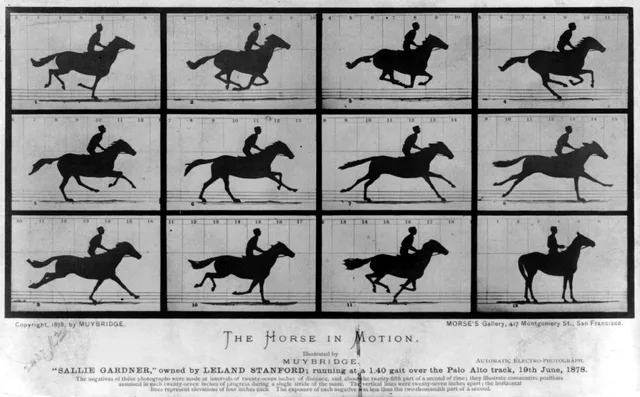
A horse gallops in a short sequence of images. In 2017, Harvard researchers turned information from this movement into DNA sequences, and then introduced them into living bacteria. The storage medium was no longer just a chip or disk.
The system used CRISPR to record fragments of information over time. The images from Eadweard Muybridge’s work were a demonstration: could we keep not only the data, but also the order of the images needed to find the movement?
The researchers then sequenced the affected regions in the bacterial population. By gathering the collected information, they reconstructed the images and their succession. The bacteria obviously had no screen or visual memory of a horse: they kept coded instructions.
This was a proof of principle. Pixels were translated into DNA bases, then re-read to make movement visible, with no miniature cinema in each bacterium.
What we know
Data encoded in a population and then sequenced; bacteria do not see or watch a film.
To go to the source
References accessed October 11, 2026. Linked pages may be in another language.
Signaler une erreur ou apporter une précision