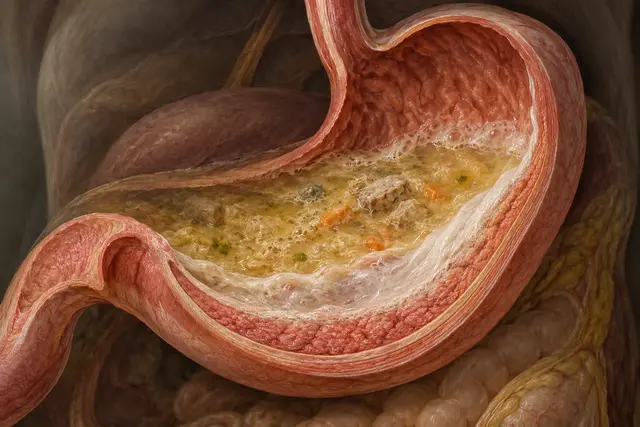
The stomach hosts an acidic environment and an enzyme capable of degrading proteins. Yet its wall is itself a living tissue. The separation between what needs to be digested and what needs to remain intact does not depend only on exceptionally hard matter.
A layer of mucus adheres to the surface. Bicarbonates help neutralize the acid near the cells, while the gel also forms a barrier against pepsin. A synthesis of research describes this association as a first line of protection of the mucosa.
This defense is active and can be disrupted; it does not make the stomach indestructible. Above all, it shows that the same organ maintains very different conditions side by side. In the middle, the meal meets an aggressive digestive environment. At a short distance, near the wall, the body maintains the conditions necessary for the preservation of its own cells.
What we know
General explanation of a physiological barrier, no diagnosis or description of all protective mechanisms.
To go to the source
References consulted on September 21, 2026. Linked pages may be in another language.
Signaler une erreur ou apporter une précision