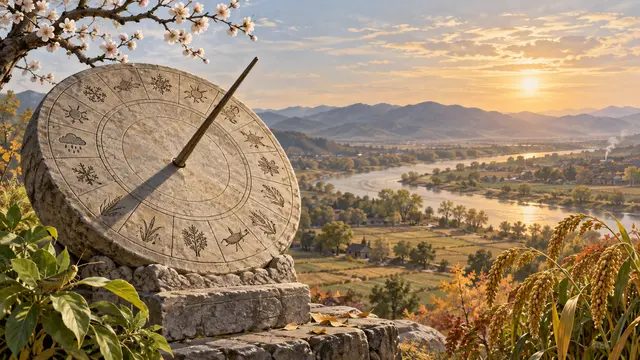
What if spring, summer, autumn and winter were not enough to tell a year? The twenty-four Chinese solar periods divide the apparent annual path of the Sun into as many segments. The names associate astronomical landmarks, such as equinoxes, with familiar observations: rain, heat, dew or insect awakening.
This system developed in the Yellow River basin from observations of temperature, precipitation and other natural phenomena. It has served as a guide for agricultural work and daily life, while accompanying seasonal practices. It thus connects a way of counting time to the attention paid to changes in the environment.
The word “solar” is essential: we are not talking about twenty-four lunar months. Names from a regional context also do not promise the same time all over China at a given date. This transmitted heritage keeps its interest precisely because it brings together the sky, the words and the local experience, rather than a universal weather.
What we know
Seasonal phenomena vary by region.
To go to the source
References consulted on September 21, 2026. Linked pages may be in another language.
Signaler une erreur ou apporter une précision