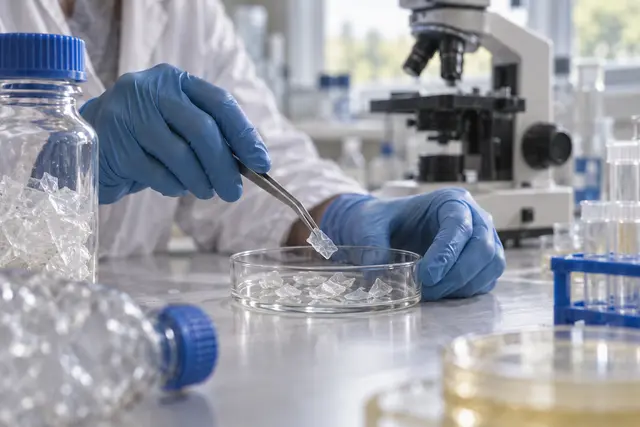
Can a material made to resist become a resource for a microorganism? In 2016, a team described Ideonella sakaiensis, a bacterium isolated after examining microbial communities exposed to PET, a common plastic.
The researchers show that it can use this material as a major source of carbon and energy. Two enzymes are involved in its decomposition. The observation is not limited to seeing a bottle disappear: it identifies a biological pathway and the molecular tools that make it possible.
The word plastic, however, covers a very diverse family of materials. A capacity demonstrated on PET under experimental conditions does not announce the disappearance of all waste in the wild. The interest of this story is more solid than a miracle: an industrial problem led researchers to examine what a tiny organism was already doing.
What we know
PET and study conditions; no one-size-fits-all solution, fast or directly applicable to the oceans announced.
To go to the source
References consulted on September 21, 2026. Linked pages may be in another language.
Signaler une erreur ou apporter une précision