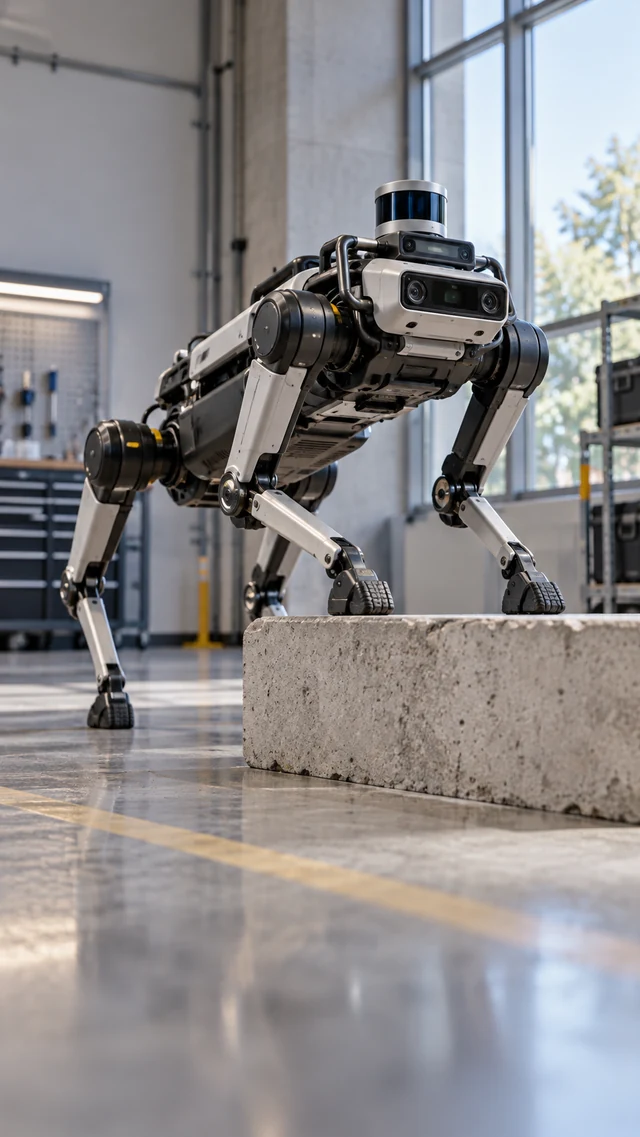
Did you know that a four-legged robot learned to cross obstacles by parkour? The work of ETH Zurich in two thousand twenty-four presents ANYmal in controlled routes. The difficulty is not only to move forward: we must adapt the support to the ground. The feet must touch a surface and then push before a jump begins. At the reception, the body must remain supported. Our generic robot illustrates these steps: no extra legs, no wall crossed or machine floating without ground support.
Learning combines movement skills and perception of obstacles. The tests show passages in a laboratory. This doesn’t mean that a robot can go through every ruin, beat every athlete, or guarantee its stability on unfamiliar terrain, under any conditions.
The interest lies in this channel: watch, choose, support and fall back correctly. The course must remain the same from one plan to another. A demonstration of mobility is already remarkable without adding an invented mission or superiority that has not been measured here.
What we know
The demonstrations concern controlled research routes. They do not guarantee the crossing of all terrains or superiority over athletes.
To go to the source
References consulted on October 12, 2026.
Signaler une erreur ou apporter une précision