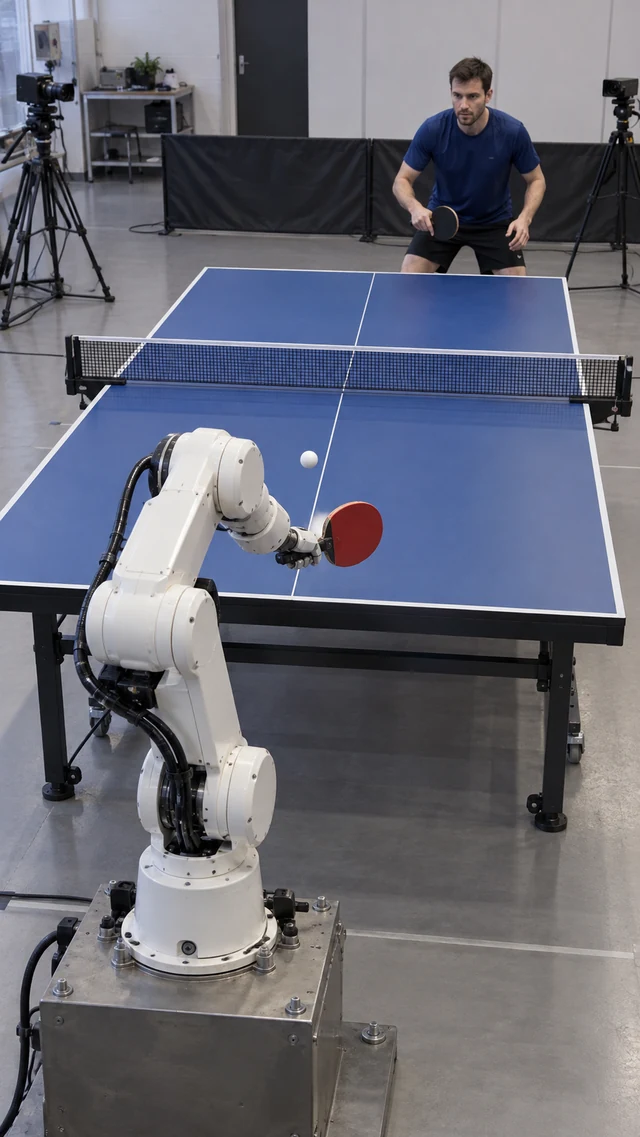
A ping-pong opponent does not need legs to force a player to react. Ace, a standalone system developed by Sony AI, combines fast perception, learned control, and specialized robotic hardware. The ball can turn on itself and change course after a bounce. The robot must transform what it observes into racket movement.
In trials reported by Nature in April 2026, Ace won three out of five games against elite players. He lost his two matches to the protocol professionals, while winning a set against one of them. These results describe these opponents and this installation, not a general invincibility.
The Sony press release then distinguishes complementary tests: victories are reported against other professionals in December 2025 and March 2026. This progress does not transform the robot into universal intelligence. It shows a precise ability to perceive, decide and act in a physical sport.
What we know
Initial results against elite players and professionals are distinguished from additional trials reported by Sony. They focus on opponents and tested equipment, not general invincibility.
To go to the source
- Nature — Présentation du résultat Ace, numéro du 23 avril 2026 ↗
- Sony AI — Résultats initiaux et essais complémentaires ↗
- Sony AI — Projet Ace, perception et contrôle ↗
References consulted on October 12, 2026.
Signaler une erreur ou apporter une précision