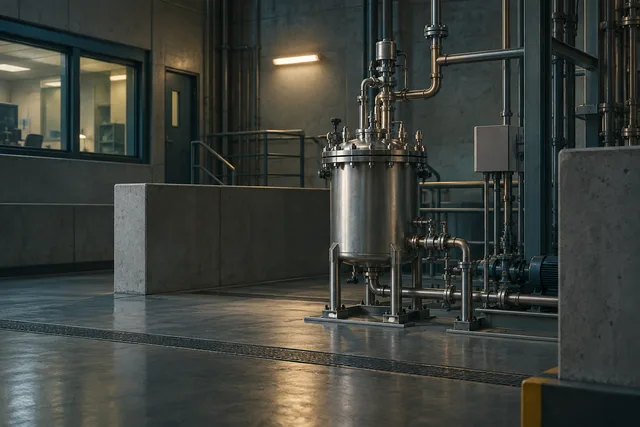
On September 30, 1999, an accident occurred at a fuel conversion facility in Tokaimura. It is not a power plant that produces electricity. Yet, a nuclear chain reaction is triggered in equipment that is not intended to function as a reactor.
Three workers are subjected to heavy irradiation, two of them very severely. The reaction continues for about twenty hours before being stopped. An international mission of the IAEA comes to examine the circumstances of the event and the first consequences observed on the spot.
Its report distinguishes irradiation from massive contamination. The building is not destroyed by an explosion and the roof remains intact. The external appearance of the installation therefore does not, by itself, allow us to understand the gravity of what happened inside.
The report is preliminary, not a final medical record. It already describes an unspectacular reaction from the outside, but very dangerous for exposed workers.
What we know
The IAEA report consulted is preliminary: it does not constitute the final medical assessment.
To go to the source
- AIEA — Report on the preliminary fact finding mission following the accident at Tokaimura (new tab)↗
References accessed October 11, 2026. Linked pages may be in another language.
Signaler une erreur ou apporter une précision