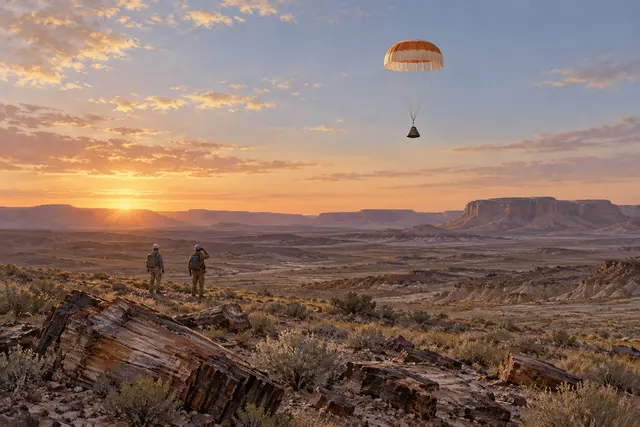
On January 15, 2006, a capsule parachuted down to the Utah desert. It reports an almost invisible cargo, collected two years earlier near Comet Wild 2. The Stardust mission becomes the first to bring samples of a comet back to Earth.
The sample did not need to land on the core. The probe passed through its dusty environment with a collector containing aerogel, a very low-density silica material. The grains were braked and trapped there, leaving traces that researchers could examine after the return.
The capsule brought back more than ten thousand particles exceeding one micrometer, according to NASA’s balance sheet. It was not a stone that could be brandished at the end of a journey, but a collection of fragments to be carefully extracted and analyzed. The scientific destination was finally on Earth: the long journey was meant to make it possible to look at these tiny visitors much closer.
What we know
Samples from the Wild 2 environment, not taken by landing on the core. Subject separate from the general sheet on aerogel.
To go to the source
References consulted on 3 October 2026. Linked pages may be in another language.
Signaler une erreur ou apporter une précision