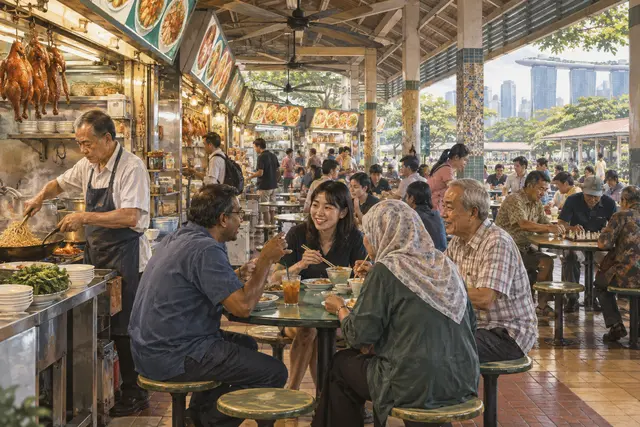
Can a dining room become a cultural heritage? In Singapore, the hawker centres bring together kitchen stalls and spaces where we eat together. Their interest goes beyond the remarkable attitude of a salesman: these places connect people of different ages, languages and backgrounds around everyday meals.
Many dishes come from the culinary traditions of immigrant groups, and then have evolved locally. Traders develop their recipes and pass on their gestures to relatives or apprentices. The application also describes multilingual conversations, chess games and artistic activities: the place serves as a meeting point as well as a restaurant.
The recognition by UNESCO, in December 2020, focuses on this combination of cuisine, space and collective life. It does not proclaim that a dish belongs exclusively to Singapore, nor that all the stands are similar. What makes heritage is renewed every day: a special preparation, its learning and people who come to share the same place.
What we know
Inscription of a collective practice, not a culinary monopoly.
To go to the source
- National Environment Agency — Hawker Culture (new tab)↗
- National Heritage Board — Dossier de candidature, page 4 (new tab)↗
References consulted on September 21, 2026. Linked pages may be in another language.
Signaler une erreur ou apporter une précision