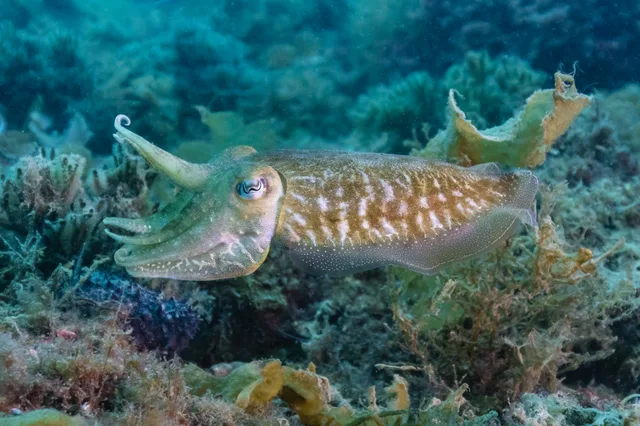
The cuttlefish can blur its silhouette against a seabed. Its skin does not only change color: reliefs appear or fade on its surface. What seemed smooth can become bumpy, helping to bring its appearance closer to that of an irregular object located nearby.
In a study presented in 2017, cuttlefish were observed with rocks of different appearances, some smooth and clear, the others rougher and marbled. The animals adjusted their skin patterns and taste buds. Some modifications occurred without contact with the rock, which supports a role of visual information in this adaptation.
The taste buds are living structures controlled by muscles. The cuttlefish does not petrify, and it does not literally become the rock it imitates. The effect is however more complete than a simple change of hue: by simultaneously modifying its colors and its surface, it makes it more difficult to read its body in the decor.
What we know
Muscle changes in skin papillae; no change in solid rock.
To go to the source
References accessed October 11, 2026. Linked pages may be in another language.
Signaler une erreur ou apporter une précision