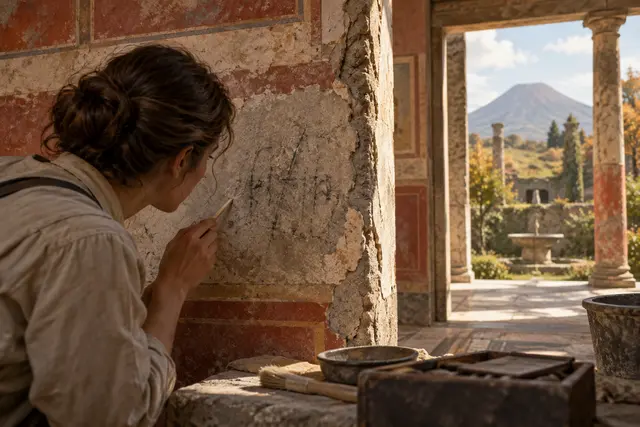
A charcoal inscription may seem less important than a fresco. In the House at the Garden of Pompeii, however, it fueled a major discussion: in what season did Vesuvius destroy the city in 79? The decisive detail is a date corresponding to October 17.
The registration was in a space under renovation. For archaeologists, this context and the fragility of coal support a realization close to the eruption. This reinforces the hypothesis of an autumnal disaster, rather than the date of August 24 often retained. The rest of the message admits several readings, which the archaeological park exposes without confusing them.
The graffiti does not carry a full year or an account of the eruption. It does not determine the exact day of the disaster. Its interest is that of a material index confronted with other observations. Sometimes, an almost erasable line on a wall forces you to reread dates that seemed solidly installed in the books.
What we know
Hint in favor of autumn, no isolated evidence of a specific day.
To go to the source
References consulted on September 21, 2026. Linked pages may be in another language.
Signaler une erreur ou apporter une précision