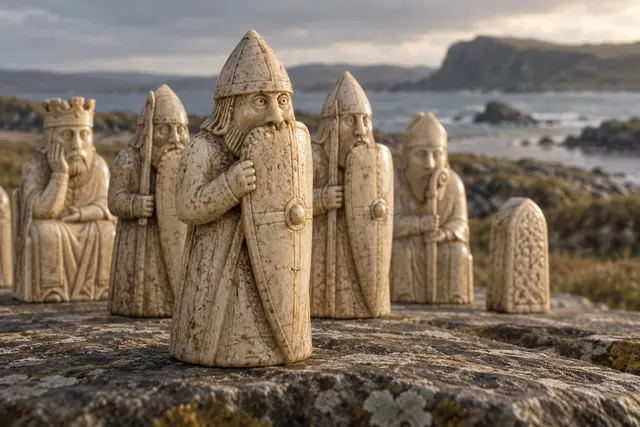
In Lewis’ chess group, some warriors make an unexpected move: they bite the edge of their own shield. This detail is carved in walrus ivory. He transforms a small play piece into an expressive character, far from the abstract silhouette of a modern tower.
These standing fighters fulfill the role of towers, also called guards. The curators of the Metropolitan Museum bring them closer to the berserkers described in the Scandinavian sagas. Their equipment is reminiscent of that of the other warriors in the group. The pieces, dated to the 12th century, were found in 1831 on the Scottish island of Lewis; their manufacture is generally located in Scandinavia.
The gesture thus tells of an imaginary warrior, but does not alone demonstrate the habits of all medieval fighters. The spectacular explanations of their trance states remain to be distinguished from the object. To appreciate this miniature scene, no extraordinary theory is necessary: the sculptor gave a silent piece a real ferocity.
What we know
Iconographic interpretation; no medical explanation asserted.
To go to the source
References consulted on September 21, 2026. Linked pages may be in another language.
Signaler une erreur ou apporter une précision