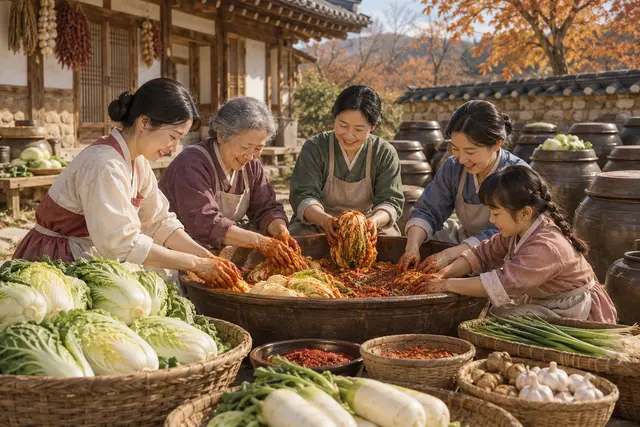
Kimchi is sometimes known as a food purchased in a pot. The kimjang designates another dimension of its history: the collective preparation and sharing of reserves, especially in late autumn, in preparation for winter.
In the UNESCO description, preparations follow the seasons. Ingredients are salted, fermented or dried before the great preparation period. Revenues vary by region and family; the exchange of provisions also provides an opportunity to pass on ways of doing things.
The result is therefore not only measured by the amount of vegetables preserved. Techniques circulate, relatives work together, reserves change houses. Behind a product that can now be found far from Korea is a set of collective gestures. The contents of the pot are only part of what is shared.
What we know
Practices evolve and recipes differ; this narrative does not purport to describe the daily lives of every Korean family.
To go to the source
References consulted on September 20, 2026. Linked pages may be in another language.
Signaler une erreur ou apporter une précision