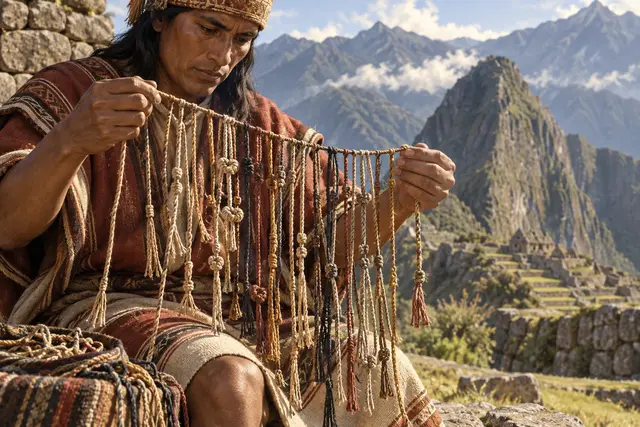
At first glance, a khipu may look like an assembly of strings. Yet its cords and knots could record information useful to the Inca administration. The medium changes the way we imagine an archive: the data does not take the form of ink lines or numbers drawn on a page.
A main rope carries hanging cords. Their lengths, colours, manufacturing and knots contribute to the organization of information. The National Museum of the American Indian cites accounts related to levies and the work done by different communities. Specialists held and used these objects to process this information.
The question of possible functions exceeding numbers remains a research topic. We should therefore not present all khipus as books with which we can read every sentence. What is already established is enough to surprise: an administration could keep accounts in a textile structure, and a node could be a given.
What we know
Attested digital uses; other forms of coding still discussed.
To go to the source
References consulted on September 21, 2026. Linked pages may be in another language.
Signaler une erreur ou apporter une précision