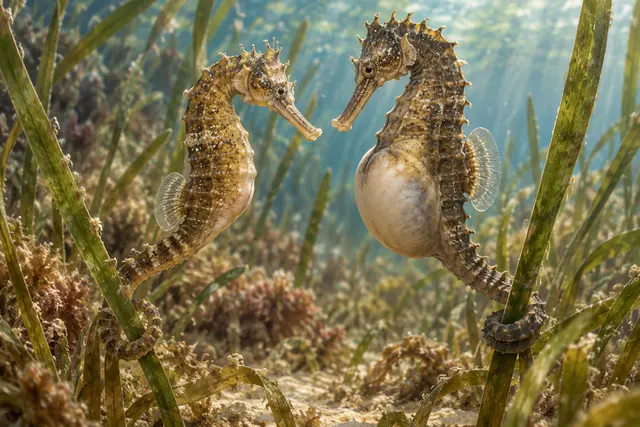
The female hippocampus transfers its eggs into the male’s pouch, which then carries the embryos. The image can make you think of a simple carrying bag. However, research shows an active organ: the pups do not remain isolated from their father during their development.
A team from the University of Sydney studied genes expressed in the pouch of the large-belly hippocampus over gestation. The results indicate functions related to nutrient intake, immune protection and exchanges with embryos. Oxygenation and waste disposal are also services associated with this particular environment.
This does not turn the pouch into a copy of the human uterus. Some genetic functions and activities are similar, while structures and their evolutionary histories differ. The astonishment is therefore not only due to the sex of the parent who carries the young: in this pocket, the male contributes physiologically to their development before their release into the water.
What we know
Comparable functions do not mean identical organs.
To go to the source
- Université de Sydney — Male seahorse and human pregnancies remarkably alike, 2015 (new tab)↗
- Smithsonian Ocean — Pregnant Seahorse (new tab)↗
References consulted on September 21, 2026. Linked pages may be in another language.
Signaler une erreur ou apporter une précision