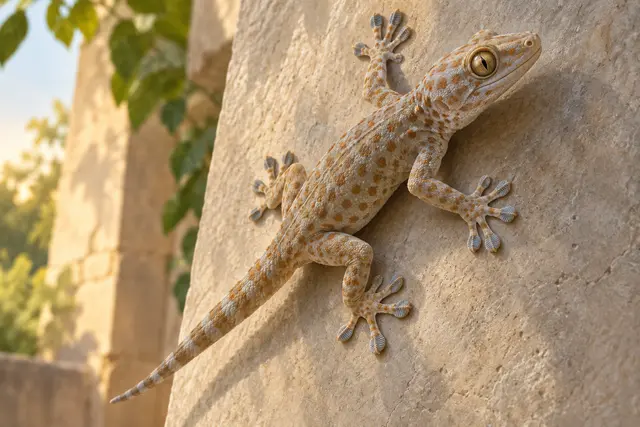
Seeing a gecko run on a smooth wall makes you want to look for a glue under its legs. However, the adhesion is based on tiny structures: branched hairs with very thin ends. Their close contact with the surface allows forces between molecules to contribute to the maintenance of the animal.
However, staying attached is not enough to run. The gecko should hang and then peel off his fingers quickly, in the right direction. A team from Berkeley and Nanking filmed animals progressing sideways on walls. The images showed how the fingers were reorienting themselves to support the weight despite the change of direction.
The researchers also added slippery passages and irregularities. Fingers still in contact could redistribute the load, while their flexibility helped to marry the ground. The feat therefore combines an adhesive surface with adjustable supports. A gecko’s paw is not only sticky: its way of landing matters just as much.
What we know
The experiments involved geckos with adhesive balls.
To go to the source
References consulted on September 21, 2026. Linked pages may be in another language.
Signaler une erreur ou apporter une précision