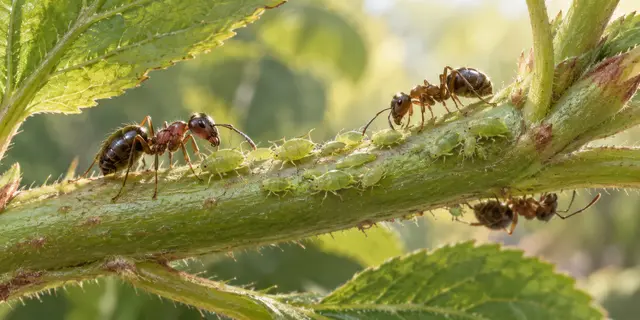
Aphids produce honeydew, a sweet secretion that some ants feed on. This resource explains associations often compared to livestock. But how to keep close to partners who can move on the plant?
A study presented in 2007 by Imperial College London compares the displacement of aphids on virgin paper and on paper previously traveled by ants. On marked surfaces, aphids move more slowly. The chemical footprints left by the ants thus participate in the phenomenon.
The farmer’s image here is a biological interaction, not a conscious agricultural plan. The relationship can also include protection from predators, while benefiting the ants that exploit the honeydew. The most unexpected detail remains invisible: there is no need for a physical fence when chemical traces are already altering the movements.
What we know
Interactions between species studied; “herd” and “breeding” are analogies, not human intentions.
To go to the source
References consulted on September 21, 2026. Linked pages may be in another language.
Signaler une erreur ou apporter une précision