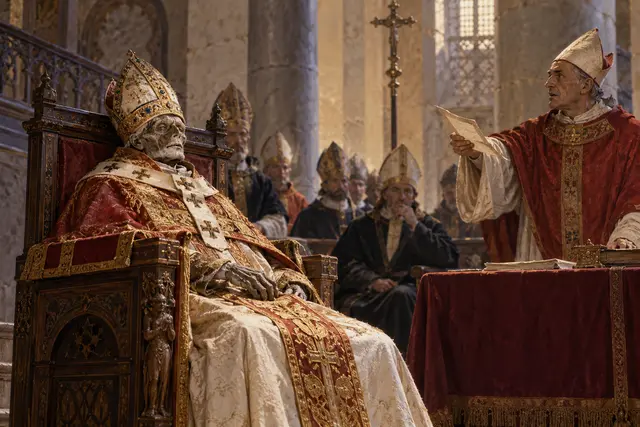
A trial usually involves an accused who is able to hear the charges. That of Formosus defies this image: in 897, the body of the former pope, who died the previous year, is exhumed and installed for a procedure against his memory and pontificate.
The episode, known as the Cadaver Council, takes place in a context of political and religious rivalries. Étienne VI impeached his predecessor. The corpse thus becomes the visible support of a struggle between the living and their alliances.
Condemnation is not even the last act in history. Formosa was rehabilitated later in the same year, and his remains were re-buried. This reversal makes the scene even more striking: after summoning a dead man, the power goes back on what he decided against him. The grave was not enough to end the conflict.
What we know
Two propositions on the same trial combined; synthetic historical narrative, without invented dialogue or added macabre details.
To go to the source
References consulted on September 21, 2026. Linked pages may be in another language.
Signaler une erreur ou apporter une précision