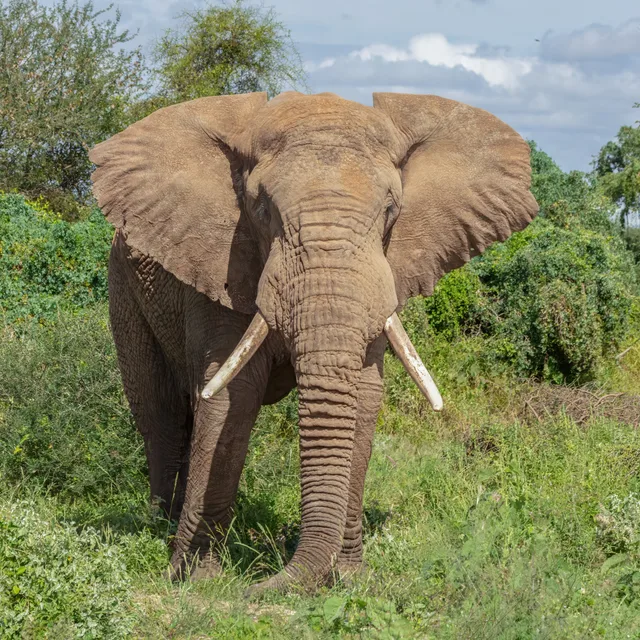
One elephant calls, and another seems to be more directly involved than its neighbors. Researchers wanted to test this impression rather than simply compare the scene to a human conversation. They studied hundreds of African elephant vocalizations recorded in Kenya, in the Samburu and Amboseli regions.
Analyses made it possible to predict, from the sound characteristics, the individual to whom certain calls were addressed. The team also released recordings to the animals. The answers were more marked when a call was intended for them than when it was addressed to another elephant. These two approaches support the existence of individualized signals.
Talking about names offers a talking picture, but there is an essential limit: scientists have not spotted a word that could be translated on a list of first names. They also didn’t decipher a language. The discovery concerns how a call can designate its recipient, an already remarkable distinction within a noisy group.
What we know
The researchers did not isolate a word equivalent to a given name or decipher a complete language.
To go to the source
References accessed October 11, 2026. Linked pages may be in another language.
Signaler une erreur ou apporter une précision