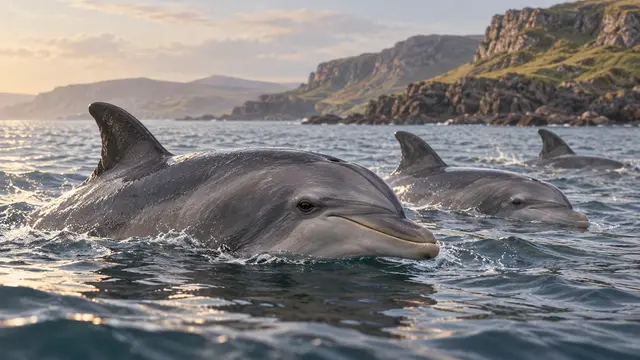
In a group of bottlenose dolphins, not all whistles are interchangeable. Each individual develops a distinctive signal, his signature. But identifying who makes a sound and calling a companion are two different uses. How do you know if dolphins are the second one too?
Biologists from the University of St Andrews have tested this issue with wild dolphins off Scotland. After recording their signatures, they broadcast to them synthetic versions of several whistles. The animals responded to the copy of their own signature, unlike the control signals.
This experience, presented in 2013, supports the idea that copying the signature of another dolphin allows to address him. The comparison with a name then becomes enlightening. It does not mean that dolphins possess our language; it shows a remarkably precise way of designating a companion in the middle of the group.
What we know
These are vocal signatures learned in bottlenose dolphins, not human names or a demonstration of language identical to ours.
To go to the source
References consulted on September 21, 2026. Linked pages may be in another language.
Signaler une erreur ou apporter une précision