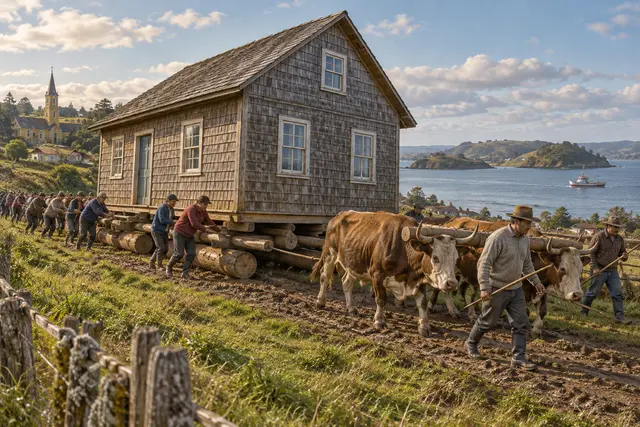
The furniture is not the only one to leave: some wooden houses in Chiloé change their location themselves. The tiradura minga mobilizes a collective work to move a construction. A file of the National Monuments Council describes the use of cylindrical trunks, human strength and oxen to advance it.
The passage can also take the sea when the preparation of the building allows it. In February 2020, the municipality of Ancud announced in Nal a demonstration organized with a local association: descend a house to the water, then navigate it and bring it back to land. This program documents a heritage event, not every move of the archipelago.
The minga, however, refers to a much broader mutual aid. Agricultural work, wool processing or other tasks can also bring neighbours together. The spectacular image of the house in motion risks masking this diversity. His story tells less of a miraculous architecture than a material knowledge associated with the ability to work together.
What we know
The maritime route cited was a demonstration announced for 2020.
To go to the source
- Conseil des monuments nationaux du Chili — Dossier des églises de Chiloé (new tab)↗
- Municipalité d’Ancud — Minga de Nal, annonce du 20 février 2020 (new tab)↗
- Ministère chilien de la Culture — Diversité des mingas (new tab)↗
References consulted on September 21, 2026. Linked pages may be in another language.
Signaler une erreur ou apporter une précision