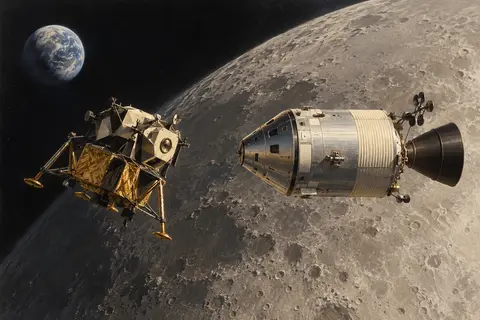
On November 14, 1969, Apollo 12 took off under a heavy sky. Tens of seconds later, an electric shock disturbs the ship. A second follows. The instruments return abnormal indications while the crew has just left the ground.
At mission control, John Aaron identifies a system issue that conditions sensor signals. It recommends placing it on its auxiliary setting. Alan Bean finds the switch and performs the maneuver. Useable indications can then return, making it possible to understand and restore the situation.
This decision is part of a chain of controls. Despite the two discharges from the launch, Apollo 12 continued its journey and its astronauts returned from the Moon. The problem looked like a general disaster; an essential part was how to read the systems.
What we know
The auxiliary setting restores the indications; it does not physically protect the rocket from lightning.
To go to the source
- NASA — Lightning Strikes Twice (new tab)↗
- NASA — 55 Years Ago: Apollo 12 Makes a Pinpoint Landing on the Moon (new tab)↗
References consulted on 3 October 2026. Linked pages may be in another language.
Signaler une erreur ou apporter une précision