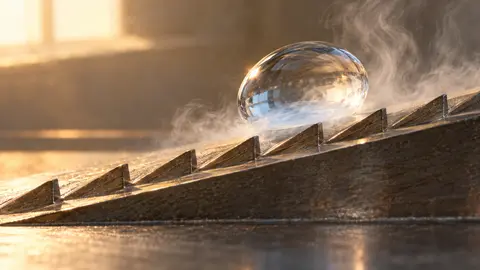
A concentrated mixture of corn starch and water can strongly withstand a quick shock. This is the principle of demonstrations where people run on a layer of this suspension. The material does not behave like a liquid of constant viscosity: its response depends on how it is solicited.
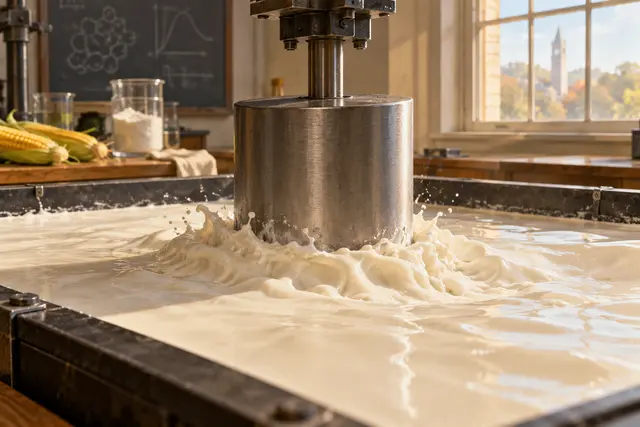
In 2020, Cornell researchers dropped a cylinder on the suspension. Without further disturbance, the material under the object stiffened and slowed its sinking. The team added a rotation oscillation to the device. The cylinder then went down much faster: this additional stress could prevent the expected stiffening.
The researchers link the behavior to networks of particles in contact that the added movement disrupts. Experience shows that a shock alone does not define the result: the geometry of the forces also counts. It’s not about chemically turning starch into stone and then melting it. The same suspension changes its resistance to flow according to the constraints.
What we know
Rigidity depends on concentration and stress.
To go to the source
References consulted on September 21, 2026. Linked pages may be in another language.
Signaler une erreur ou apporter une précision