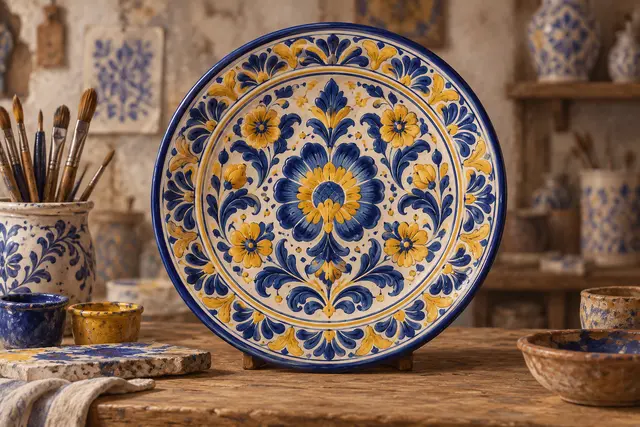
A decorated plate can open a story between two continents. In 2019, UNESCO brought together in a single inscription the Talavera of Puebla and Tlaxcala, Mexico, and the ceramics of Talavera de la Reina and El Puente del Arzobispo, Spain. It is the artisanal processes that form the common heritage.
Preparing the earth, shaping, decorating, working the enamels and conducting the cooking requires several skills. Some artisans combine them, others specialize. The shape can be born on the turn or in a mold; the colors also depend on the work of pigments and enamels. The finished plate brings together several steps that its appearance does not immediately reveal.
However, not all workshops have the same signature. Shapes, colors, and decors vary, while modern tools, such as electric potter towers, can get into the job. The continuity of a know-how does not mean technical immobility. Ocean-separated communities maintain artisanal kinship while retaining their own stories and choices.
What we know
The technique of the poncif cited comes from the Spanish file.
To go to the source
- UNESCO — Décision d’inscription binationale de la talavera (new tab)↗
- Inventaire espagnol — Techniques de céramique de Talavera (new tab)↗
- UNESCO — Notice complète de la talavera (new tab)↗
References consulted on 3 October 2026. Linked pages may be in another language.
Signaler une erreur ou apporter une précision