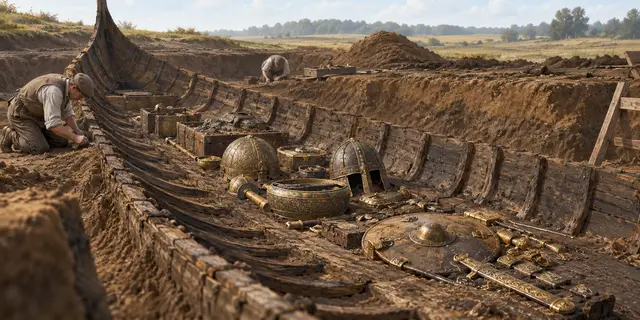
In 1939, the excavations of Sutton Hoo reveal a spectacular burial: the traces of a large boat and objects of exceptional wealth. But an expected piece is missing. No skeleton appears in the burial chamber.
Should we imagine a monument raised without a dead person? The acidic soil provides another possibility: human remains can decompose there to the point of no longer being visible. Subsequent phosphorus analyses support the ancient presence of a body.
The exact identity of the buried person is still being discussed. The riddle does not end with a name inscribed on a tomb. It offers a more discreet lesson: in archaeology, what has disappeared can still leave traces. It was necessary to look for a chemical signature where the eye could no longer find bone.
What we know
Attribution to a specific historical figure remains a hypothesis; the absence of bones does not prove an empty tomb.
To go to the source
References consulted on September 20, 2026. Linked pages may be in another language.
Signaler une erreur ou apporter une précision