On the night of November 1, 1986, a chemical warehouse burned in the Schweizerhalle complex, near Basel. The fire is spectacular, but one of its most serious effects is taking a less visible path: the water used to fight the fire carries substances to the Rhine.
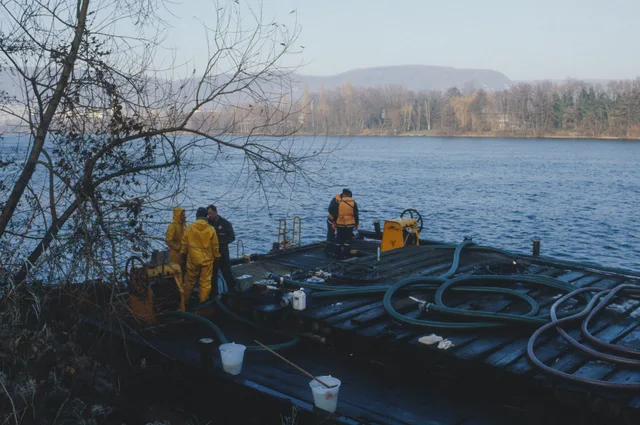
The disaster then goes beyond the industrial site and the Swiss borders. A wave of pollution descends the river. The Federal Office for the Environment recalls ecological damage over several hundred kilometers and a recovery that takes years. The extinction of the building does not mean the end of the event.
Schweizerhalle contributes to the development of the Swiss Major Accident Ordinance. Prevention concerns not only facilities, but also transport and pipelines: hazardous products do not always remain where they are stored.
The story does not present today’s Rhine as a doomed river. It recalls a precise tipping of its history. In seeking to stop a fire, it was discovered how much water travel could give a local accident an international reach.
What we know
Historical effects do not describe the current state of the Rhine.
To go to the source
- OFEV — Schweizerhalle, a fire sparks action on major accident prevention (new tab)↗
- OFEV — 30 Years After the Schweizerhalle Chemical Accident (new tab)↗
References accessed October 11, 2026. Linked pages may be in another language.
Signaler une erreur ou apporter une précision