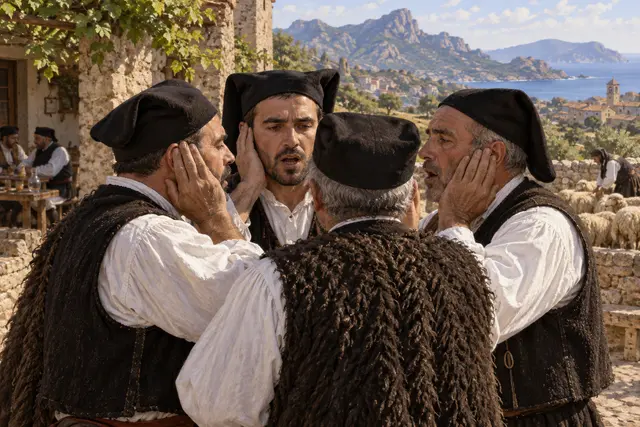
In the canto a tenore of Sardinia, four men come together in a circle to sing. The parts bear the names of bassu, contra, boche and mesu boche. The bass and contra voices give the group a serious and guttural timbre, while a soloist carries the text.
This song belongs to the pastoral culture, but is not limited to a stage show. It can pop up in local bars or accompany weddings, sheep shearing and parties. The poems sung are ancient or contemporary: emigration, unemployment and politics can join the repertoire.
Therefore, tradition does not consist in keeping only words frozen in the past. It also allows the present life to enter. His move to the tourist scenes, however, poses a question: how to preserve the diversity and intimacy of a song when its setting becomes that of a representation for visitors?
What we know
Four-part polyphonic song; not confused with a single khmemei singer.
To go to the source
References consulted on 3 October 2026. Linked pages may be in another language.
Signaler une erreur ou apporter une précision