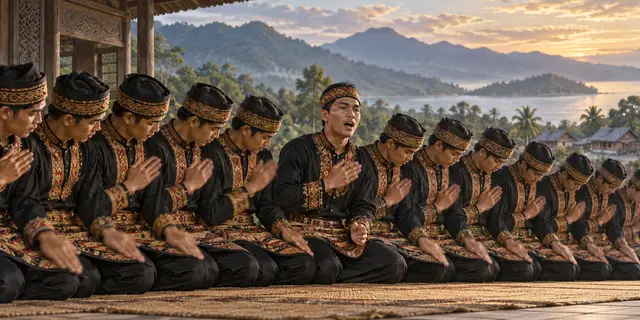
Dance doesn’t always have to go through a scene. In the saman, heritage of the Gayo of Aceh, on the island of Sumatra, boys and young men stand in tight rows, kneeling or sitting on their heels. The movement develops from this proximity.
In the middle of the row, a leader leads the sung verses, often in gayo language, whose tone can be religious, in love or humorous. Interpreters hit their hands, thighs, chest, or the floor; their bodies and heads follow the rhythm changes. Movements can be synchronized or alternated between groups.
The tradition goes hand in hand with festivals and invitations between villages. In 2011, UNESCO placed it on the list requiring urgent safeguarding, which reminds us that its maintenance is not a given. Visible virtuosity stems as much from the gestures as from the knowledge transmitted by the leaders, essential for the rank to move forward together without changing places.
What we know
Gayo practice, distinct from other Indonesian dances; 2011 registration, not current diagnosis quantified.
To go to the source
References consulted on 3 October 2026. Linked pages may be in another language.
Signaler une erreur ou apporter une précision