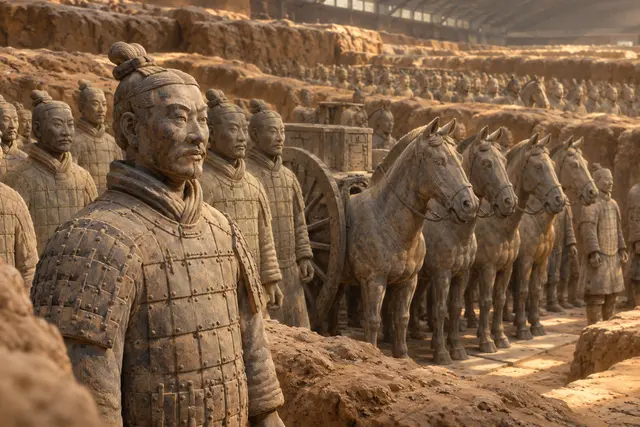
Life-size soldiers, horses and chariots: around the mausoleum of the first Qin emperor, archaeology has revealed an organization that far exceeds an isolated tomb. The Terracotta Army is part of a vast burial complex designed to symbolically prolong the imperial order.
Qin Shi Huang died in 210 BCE. The site, near Xi’an, includes many pits and facilities. UNESCO highlights the differences in detail between the figures as well as the wealth of information they provide on weapons, clothing and manufacturing techniques.
So these soldiers are not just an impressive crowd to photograph. They also tell the story of how to represent power and prepare for the afterlife. Their rows facing outside the tomb give the whole a symbolic guarding function. More than two millennia after their creation, this immobile army continues to work the living who seek to understand it.
What we know
Statues and funerary complex; no human army buried alive nor full exploration of the asserted central tomb.
To go to the source
References consulted on September 21, 2026. Linked pages may be in another language.
Signaler une erreur ou apporter une précision