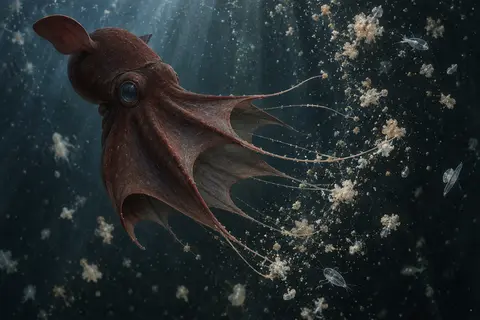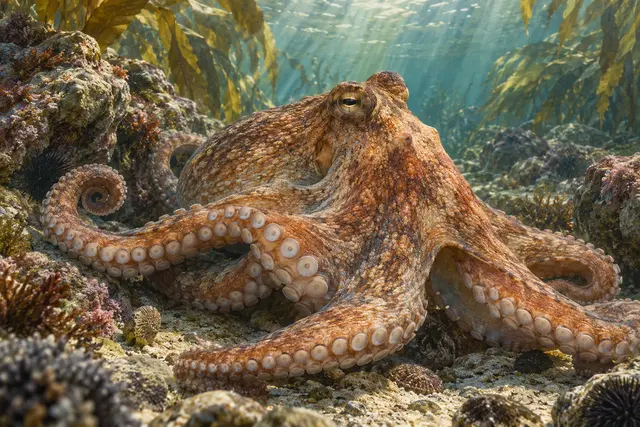
One might think that three hearts represent three chances of surviving if one stops. In the octopus, their role is much more specialized: two send blood to the gills, while a third distributes it to the rest of the body.
This organization accompanies another unusual detail. The oxygen transport is based on a molecule containing copper, hemocyanin. The oxygenated blood thus takes on a bluish hue, far from the red to which we are accustomed.
There is nothing supernatural about this anatomy. It simply reminds us that our own body does not provide the unique model of the living. To perform such a fundamental function as circulating oxygen, evolution has produced another division of tasks etand another color.
What we know
The three cores perform different functions; they are not three interchangeable backups.
To go to the source
References consulted on September 20, 2026. Linked pages may be in another language.
Signaler une erreur ou apporter une précision