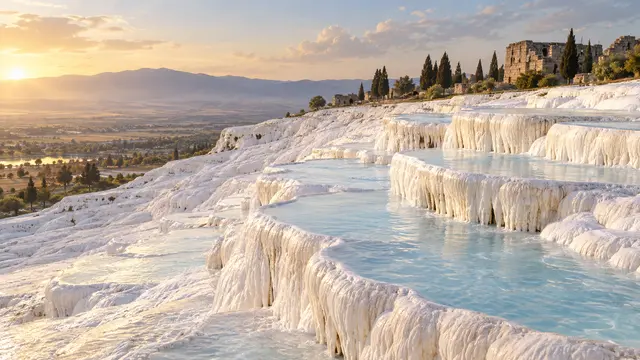
White steps descend along the relief, with basins with rounded edges. A photograph of Pamukkale can be reminiscent of snow or ice. Yet the landscape is associated with hot springs. Its whiteness comes from mineral deposits, not from spectacular freezing.
Mineral-laden waters deposit calcium carbonate, building travertine formations. The layers accumulate and draw the terraces. UNESCO links the site to the ancient spa town of Hierapolis: the waters have thus shaped both a natural landscape and a long history of occupation and human use.
The Turkish name Pamukkale evokes a cotton castle. Here again, the image describes an impression rather than the actual matter. Neither snow nor fabric: under this soft appearance is rock. The surprise is this work of water, capable not only of digging a relief, but also of depositing the shapes as it passes through it.
What we know
Mineral terraces; no therapeutic effect of the waters asserted.
To go to the source
References consulted on September 21, 2026. Linked pages may be in another language.
Signaler une erreur ou apporter une précision