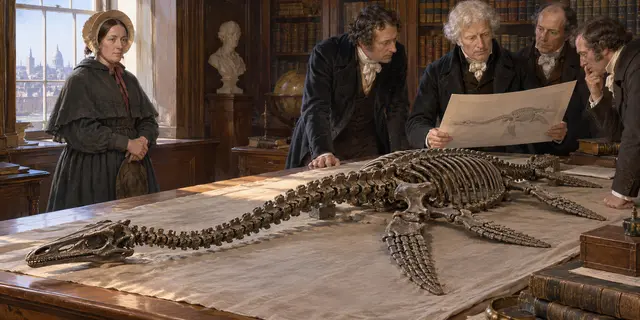
In December 1823, Mary Anning discovered a complete skeleton of plesiosaur. The animal has such an unusual silhouette that doubts circulate quickly. What if we had assembled several beings to make a monster?
Georges Cuvier examines drawings and first challenges the discovery. New illustrations and exchanges between researchers then convince him of its authenticity. The fossil forces scientists to accept an anatomy that their expectations made suspect.
A meeting is held at the Geological Society in London; Anning is not invited. Discovery ends up entering science more easily than its discoverer in its institutions. There was something improbable about this story, but it wasn’t the skeleton.
What we know
The story is about the plesiosaur of 1823, not the discovery of ichthyosaur to which his brother Joseph had contributed.
To go to the source
References consulted on September 20, 2026. Linked pages may be in another language.
Signaler une erreur ou apporter une précision