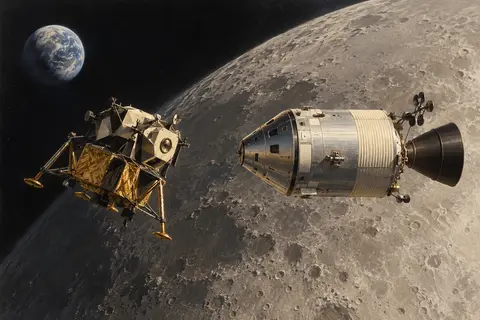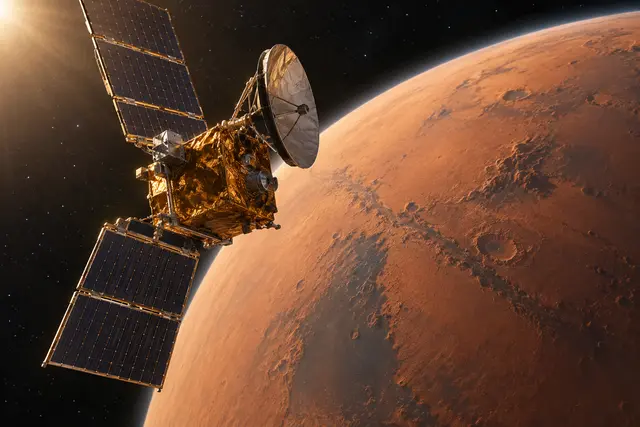
On September 23, 1999, Mars Climate Orbiter reached its destination after months of travel. It must study the planet from an orbit. But the signal disappears and is not found. The investigation reveals a terrestrial error: information needed to calculate its trajectory did not use the expected units.
A software file on the ground expressed small pulses in pounds-force seconds, while the recipient system waited for newtons-seconds. The same numbers therefore corresponded to pulses of different values. This discrepancy skewed the motion modeling and drove the probe far too close to Mars during its arrival.
Reducing the story to a person who has forgotten a conversion would be incomplete. The reports also look at checks, team interfaces and procedures that should have revealed the problem. The surprise is not only that such a simple mistake reaches space: it has gone through an entire technical organization before its consequences become irreversible.
What we know
The unit error was accompanied by verification failures.
To go to the source
- NASA — Enquête Mars Climate Orbiter, Phase I, sections 4–5, reproduite en annexe B du rapport Phase II (new tab)↗
- NASA — Bilan initial, leçon 641 (new tab)↗
References consulted on 3 October 2026. Linked pages may be in another language.
Signaler une erreur ou apporter une précision