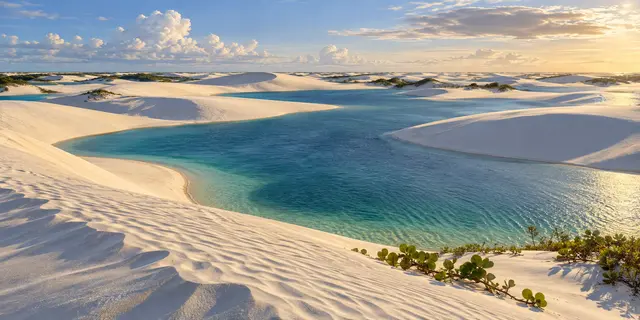
White sand as far as the eye can see, then a stretch of water between two dunes: in Lenisis Maranhenses, the landscape seems to have mixed two destinations. The contradiction comes mainly from the word desert. This coastal region of Brazil has a semi-humid climate and receives a real rainy season.
The water then fills many depressions between the dunes. UNESCO describes rain-fed lagoons, whose shapes, colors and depths vary. The wind, on the other hand, continues to move the sand from the coastal dynamics. Dry spaces and water surfaces belong to the same moving system.
A photograph is not the permanent portrait of the park. Many lagoons are temporary, while others persist. Their presence depends on the water cycle and the dune relief. The show does not require any glamour: these are real waters, in a landscape that the abundance of sand had made us interpret too quickly.
What we know
Coastal dunes in semi-humid climate; varying levels.
To go to the source
References consulted on September 21, 2026. Linked pages may be in another language.
Signaler une erreur ou apporter une précision