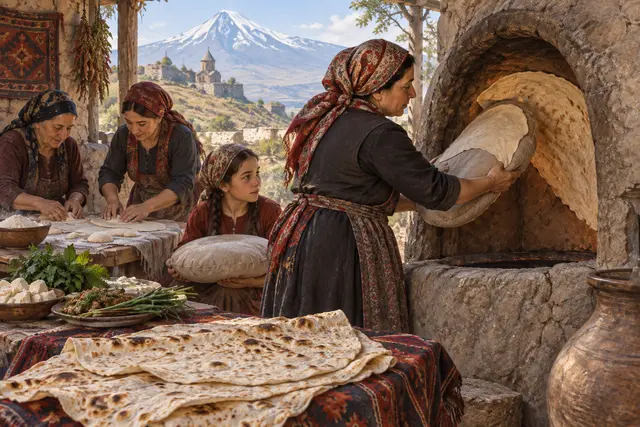
To cook the lavash, a thin layer of dough is laid on an oval cushion, then applied against the wall of a traditional clay oven. The bread stays there briefly before being taken off. The cushion is therefore not intended for rest: it helps to place the dough where it will cook.
Preparation requires coordination and experience. A small group of women usually work together, while the younger ones start by helping before taking on more responsibilities. Making the cushions and building the ovens are also part of the know-how transmitted.
This bread can wrap cheeses, herbs or meat, but its role goes beyond the meal. At weddings, it is placed on the shoulders of the new spouses, as a wish for fertility and prosperity. The gesture is a cultural symbol: it transforms a daily food into a sign of welcome for a new common life.
What we know
Documented Armenian use, not exclusive to the existence of flatbread; fecundity ritual wish.
To go to the source
References consulted on 3 October 2026. Linked pages may be in another language.
Signaler une erreur ou apporter une précision