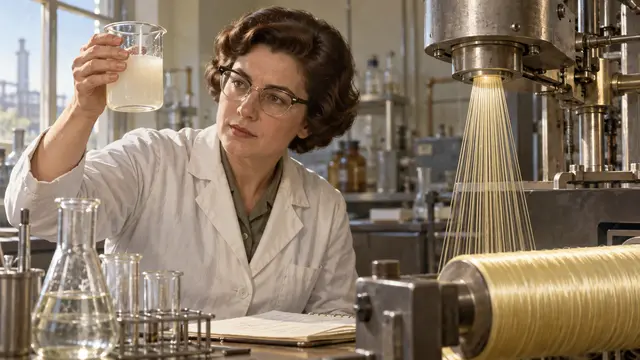
A solution of polymer too fluid and cloudy does not inspire confidence in the manager of a spinning machine. It could obstruct the tiny openings of the device. In a 1998 interview, Stephanie Kwolek recounted her insistence on trying an unusual preparation during her research at DuPont in the 1960s.
First it filters the liquid: its cloudy appearance remains. Other observations convince her that he deserves a try. When the solution is finally spun, the fibers obtained reveal remarkable strength and rigidity. Their behavior leads to the study of solutions where rigid molecules organize and then align during spinning.
This work paves the way for high-performance aramid fibres, including Kevlar. The transition to the industrial product then mobilizes other researchers and new processes. So the story is not about an accident that would have delivered a finished material. It begins with an anomaly taken seriously, followed by tests and collective development.
What we know
The interview is a retrospective memory; industrialization was collective.
To go to the source
- Science History Institute — Entretien avec Stephanie L. Kwolek, 1998 (new tab)↗
- Science History Institute — Stephanie L. Kwolek (new tab)↗
References consulted on September 21, 2026. Linked pages may be in another language.
Signaler une erreur ou apporter une précision