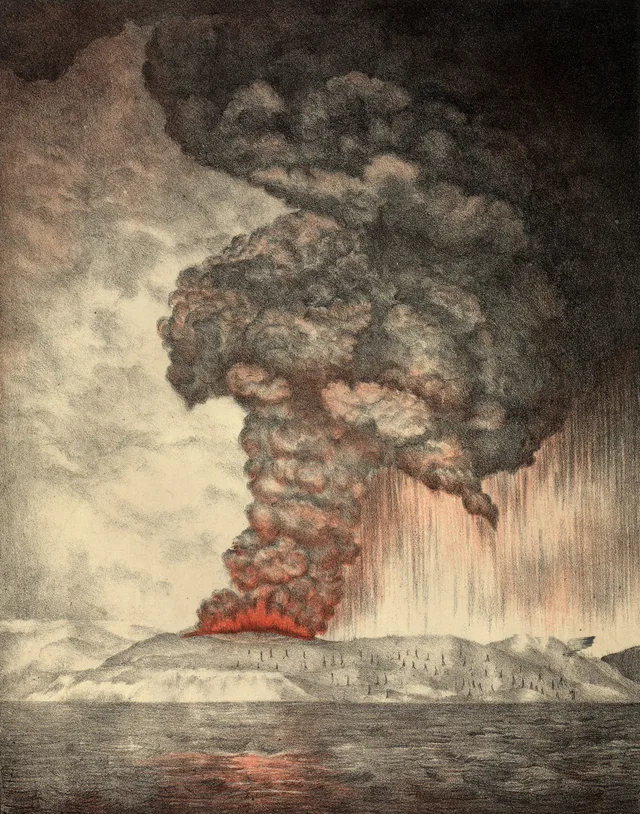
In August 1883, Krakatau experienced a series of major explosions in the Sonde Strait. A large part of the island collapses. Around the volcano, the inhabitants are not only exposed to ash and hot materials: the displacement of water causes tsunamis that ravage the coasts of Java and Sumatra.
NOAA attributes tsunamis to the bulk of the approximately thirty-six thousand deaths associated with the disaster. The waves are destroying many coastal communities. The effects of the eruption also extend beyond the immediate region: the materials projected into the atmosphere change the appearance of the sky and contribute to cooling.
A new cone, Anak Krakatau, will then develop in the area, hence its name “Krakatau child”. The sea visible around this volcanic landscape is therefore not a simple setting. In 1883, it transmitted a major part of the destruction to populations that were not on the erupting island.
What we know
Volcanic mechanisms and tsunamis must be distinguished. Historic heights are local estimates.
To go to the source
References accessed October 11, 2026. Linked pages may be in another language.
Signaler une erreur ou apporter une précision