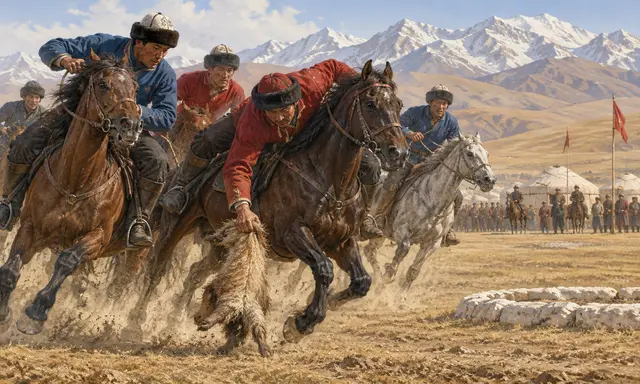
Two mounted teams are looking to drop an object in the opposing goal. The scene can evoke a ball sport; the Kyrgyz kok boru uses a ulak. Traditionally, it is a goat carcass. The UNESCO description states that a molded substitute replaces it in modern forms of the game.
The experience is not only used to lead your horse: seasoned players become referees, while elders, the kalystar, ensure fairness. The practice brings together amateur, semi-professional and high-level teams. It requires a coordination that the singularity of the object would risk making forget.
The National Federation of Kok Boru, established in 1998, participates in the transmission and organization of the practice. Demonstrations and festive meetings also make it possible to learn it. The game thus retains a local history while changing some of its material means: its tradition does not mean that each current competition necessarily uses a carcass.
What we know
Distinguished traditional carcass and modern substitute; no identical rule attributed to all encounters.
To go to the source
References consulted on 3 October 2026. Linked pages may be in another language.
Signaler une erreur ou apporter une précision