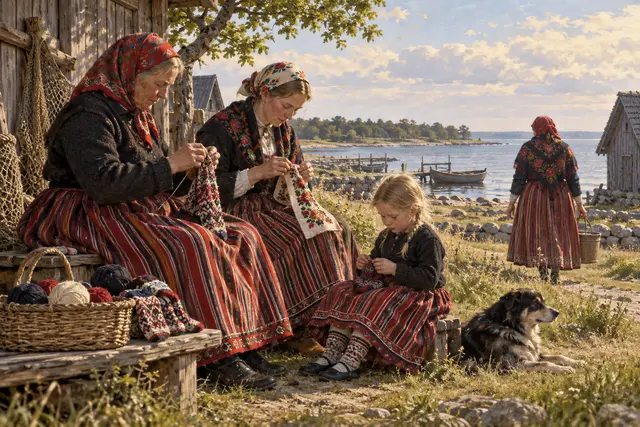
On the Estonian islands of Kihnu and Manija, woolen clothing is one of the most visible signs of a local culture. Skirts, gloves, stockings and other pieces can wear bright stripes and embroidery. Some shapes and colors refer to ancient legends.
In the historical organization described by UNESCO, men went fishing, while women maintained homes and agricultural activities. They have played a central role in the transmission of songs, dances, ceremonies and textile know-how, often associated with collective activities.
This story does not mean that the island is a state ruled solely by women, as tourist shortcuts might suggest. It shows a cultural transmission carried largely by them. Clothes are therefore not only a picturesque setting: their techniques and patterns belong to a memory learned in the community.
What we know
The cultural role of women, not the affirmation of a matriarchal political regime or a current population.
To go to the source
References consulted on 3 October 2026. Linked pages may be in another language.
Signaler une erreur ou apporter une précision