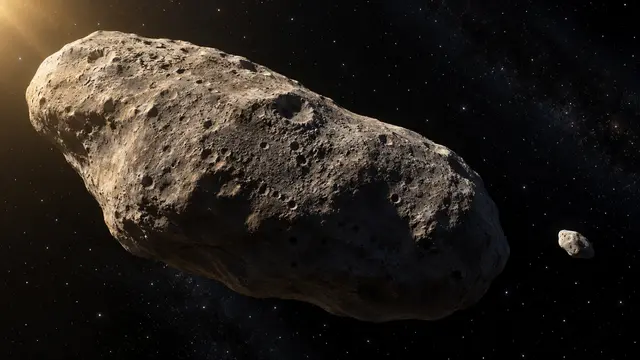
On August 28, 1993, the Galileo spacecraft passed near the asteroid Ida en route to Jupiter. His images show a body covered with craters, but also a small companion. The importance of this only becomes clear by studying the photographs returned to Earth.
NASA dated February 17, 1994 when Ann Harch, a member of the imaging team, discovered Dactyl. Ida becomes the first asteroid to have a moon confirmed. An object that could be imagined isolated is revealed accompanied, changing what this flyby allows to learn about the small bodies of the Solar System.
The discovery did not occur when the camera took the photo. Several months separate the meeting and the scientific identification. The story of Dactyl is reminiscent of a peculiarity of space exploration: the probe can already be far away when researchers recognize what it has actually carried in its images.
What we know
First asteroid satellite confirmed; shooting and identification distinguished.
To go to the source
References consulted on 3 October 2026. Linked pages may be in another language.
Signaler une erreur ou apporter une précision