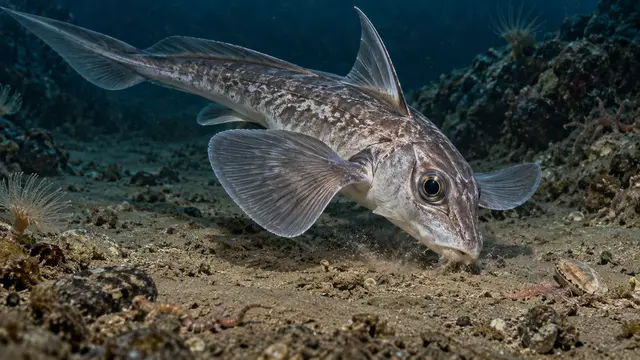
Hydrolagus has a cartilaginous skeleton and belongs to chimeras, close relatives of sharks and rays. Its wide fins allow it to maneuver near the bottom, sometimes remaining almost in place. Its English name "ghost shark" does not describe a supernatural animal.
Receivers in his head detect the electrical signals of invertebrates buried in the vase. Its smell also helps to find animal matter, while its dental plaques can crush hard prey. The food hidden under the sediments therefore leaves other clues than its image.
The videos of the MBARI robots helped to describe species and expand the areas where some were known. A seemingly empty background can thus offer meals that our cameras do not show directly. For this animal, visible relief is only part of the available information.
What we know
Chimeras, not real sharks; detection of biological signals, not vision through the ground.
To go to the source
References consulted on 3 October 2026. Linked pages may be in another language.
Signaler une erreur ou apporter une précision