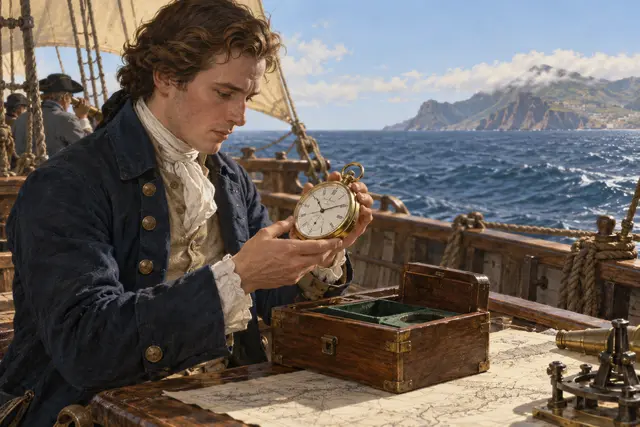
A watch can tell the time. On board a ship, an accurate reference time can also help determine longitude. But the movements of the boat and changes in conditions make it difficult. John Harrison has spent decades building instruments to meet this challenge.
Its fourth marine chronometer, H4, looks like a big pocket watch. In 1761, his son William won on a trial trip to Jamaica. En route, the instrument allows him to announce an arrival in Madeira earlier than expected by the crew. A relatively small object promises to correct an ocean-wide error.
However, the story does not end with an immediate and unanimous reward. Further trials, disagreements and the issue of the reproduction of the instrument prolong the case. To turn a success into a widely usable solution, other watchmakers must also be able to make reliable devices, and then reduce the cost.
What we know
H4 is a specialized instrument; an ordinary watch did not solve this problem at sea.
To go to the source
References consulted on September 21, 2026. Linked pages may be in another language.
Signaler une erreur ou apporter une précision